
Table of Contents
Introduction 🚀
Choosing the right marketing automation platform can feel like finding a needle in a haystack 🌾. With so many options available, it’s essential to understand what sets each platform apart. In this blog post, we’ll dive deep into ActiveCampaign and ConvertKit, two of the most popular marketing automation tools on the market. ActiveCampaign is known for its advanced features and CRM capabilities, while ConvertKit is beloved by content creators and small businesses for its simplicity and ease of use. 🎯
Selecting the right marketing automation platform can make or break your marketing efforts. The right platform helps you streamline your processes, engage your audience, and ultimately grow your business. 🌱 On the other hand, a poorly chosen platform can lead to frustration, wasted resources, and missed opportunities. 😥
In this in-depth comparison, we’ll explore the features, pricing, and user experiences of ActiveCampaign and ConvertKit. By the end of this post, you’ll have a clear understanding of each platform and be better equipped to decide which tool is the right fit for your business needs. 🤔
Overview of ActiveCampaign 🌟
Key features and functionalities 💥
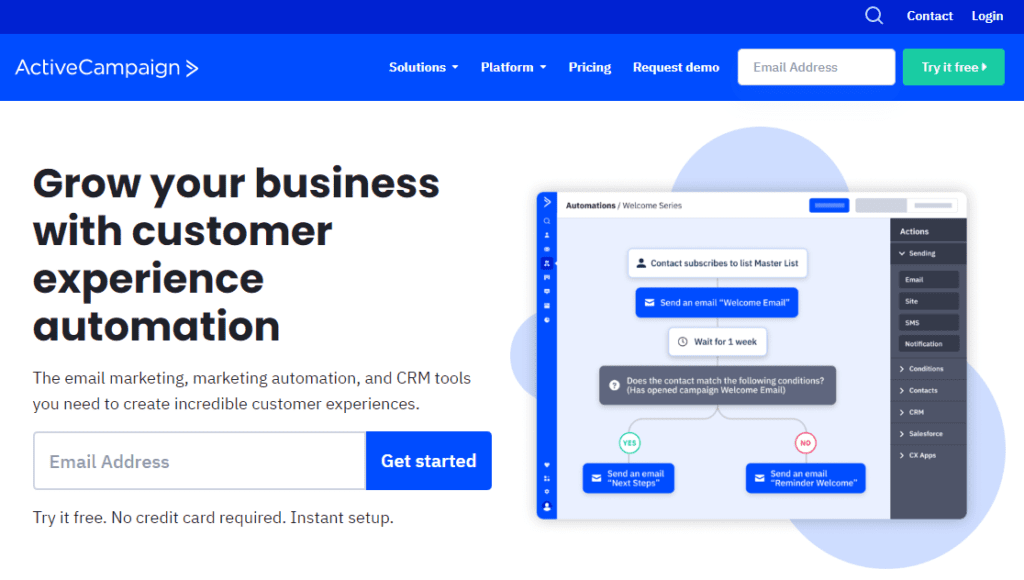
ActiveCampaign is a powerful marketing automation platform that offers a wide array of features, including advanced email marketing, CRM, sales automation, and more. 🌐 Some key functionalities include:
- Complex automations
- Dynamic content
- Lead capture and management tools
- Built-in CRM
- Analytics and reporting
Use cases and target audience 🎯
ActiveCampaign is best suited for businesses that need robust marketing tools and advanced automation capabilities. This platform is particularly beneficial for:
- E-commerce and retail businesses
- Service-based businesses
- B2B businesses
- Mid-sized and enterprise-level organizations
Pricing and plans 💰
ActiveCampaign offers four pricing tiers:
- Lite: Starting at $9/month
- Plus: Starting at $49/month
- Professional: Starting at $129/month
- Enterprise: Starting at $229/month
The features and functionalities available depend on the chosen plan. 📊
Pros and cons 👍👎
Pros:
- Advanced marketing automation features
- Built-in CRM
- Wide range of integrations
- In-depth analytics and reporting
Cons:
- Steeper learning curve
- More expensive than ConvertKit
- Less suitable for beginners
Overview of ConvertKit 🌟
Key features and functionalities 💥
ConvertKit is a user-friendly marketing automation platform designed with content creators and small businesses in mind. Some key features include:
- Simple email marketing tools
- Visually appealing forms and landing pages
- Basic automations
- Tag-based subscriber organization
Use cases and target audience 🎯
ConvertKit is ideal for:
- Content creators
- Bloggers
- Small businesses
- Solopreneurs
Pricing and plans 💰
ConvertKit offers three pricing tiers:
- Free: $0/month (up to 1,000 subscribers)
- Creator: Starting at $29/month
- Creator Pro: Starting at $59/month
Pros and cons 👍👎
Pros:
- User-friendly interface
- Simplicity and ease of use
- Designed for content creators and small businesses
- Free plan available
Cons:
- Limited advanced automation features
- Lacks built-in CRM
- Less suitable for larger businesses or those with complex marketing needs
Comparison of Features and Functionalities 📊
Email marketing and automation 💌:
- ActiveCampaign offers advanced email marketing features, including complex automations, split testing, and dynamic content.
- ConvertKit focuses on simplicity and ease of use, providing essential email marketing features, like broadcasts, sequences, and basic automations.
Lead capture and management 🎣:
- ActiveCampaign provides comprehensive lead capture and management tools, such as forms, landing pages, and a built-in CRM.
- ConvertKit offers visually appealing forms and landing pages, but lacks a built-in CRM for managing leads.
Sales and marketing automation 📈:
- ActiveCampaign excels in advanced marketing automation features, like multi-step automations, lead scoring, and pipeline management.
- ConvertKit’s primary focus is on email marketing, making it less suitable for businesses requiring advanced sales and marketing automation features.
Analytics and reporting 📊:
- ActiveCampaign provides more in-depth insights and data visualization options for tracking campaign performance and user behavior.
- ConvertKit offers basic reporting functionality to track email campaign performance.
Integrations and third-party apps 🔗:
- ActiveCampaign boasts a more extensive list of integrations and third-party apps compared to ConvertKit, allowing businesses to connect with various tools and software.
- ConvertKit provides a smaller list of integrations focused on content creators and small businesses.
User interface and ease of use 🖥️:
- ConvertKit is known for its user-friendly interface and ease of use, making it an excellent choice for beginners.
- ActiveCampaign’s interface can be more challenging to navigate, but it offers more advanced features and customization options.
Customer support and resources 📚:
- Both platforms provide reliable customer support and resources, with ActiveCampaign offering email and live chat support, while ConvertKit provides email support and an extensive knowledge base.
Comparison of Use Cases and Target Audience 🌍
Small businesses and startups 🏢:
- ConvertKit’s simplicity and affordability make it an attractive option for small businesses and startups.
- ActiveCampaign’s advanced features may be overkill for businesses with limited resources and straightforward marketing needs.
Mid-sized and enterprise-level businesses 🏦:
- ActiveCampaign’s robust features, CRM, and scalability make it a better fit for mid-sized and enterprise-level businesses.
- ConvertKit may not be sufficient for businesses with more complex marketing needs or larger teams.
E-commerce and retail businesses 🛍️:
- ActiveCampaign’s advanced automations and CRM capabilities cater well to the needs of e-commerce and retail businesses.
- ConvertKit’s limited marketing automation features may not be enough for businesses in this industry.
Service-based businesses 🛎️:
- ActiveCampaign’s CRM and sales automation tools can greatly benefit service-based businesses.
- ConvertKit may not provide enough functionality for businesses with a strong focus on customer relationship management.
Non-profit organizations 🌳:
- Both platforms can serve non-profit organizations, with ActiveCampaign offering more advanced features and ConvertKit providing simplicity and affordability.
- The choice will depend on the organization’s specific marketing requirements and budget constraints.
Educational institutions 🎓:
- ActiveCampaign’s advanced automation features and CRM can benefit educational institutions with complex communication needs.
- ConvertKit may be more suitable for smaller educational institutions or those with simpler marketing requirements.
Comparison of Pricing and Plans 💸
Monthly and annual pricing 📆:
- ActiveCampaign: Offers monthly and annual pricing options, with discounts available for annual plans.
- ConvertKit: Provides both monthly and annual pricing, with savings for users who choose annual plans.
Features and functionalities included in each plan 🎁:
- ActiveCampaign:
- Lite: Basic email marketing, marketing automation, and integrations.
- Plus: CRM, lead scoring, custom user permissions, and more.
- Professional: Advanced marketing automation, site messaging, and attribution.
- Enterprise: Custom reporting, dedicated account rep, and unlimited users.

- ConvertKit:
- Free: Unlimited landing pages and forms, email broadcasts, and 1,000 subscribers.
- Creator: Automation, integrations, and premium support.
- Creator Pro: Advanced reporting, priority support, and Facebook custom audiences.
Value for money 💵:
- ActiveCampaign: Excellent value for businesses that require advanced features and can fully utilize the platform’s capabilities.
- ConvertKit: Great value for content creators and small businesses looking for a user-friendly platform with essential email marketing features.
Flexibility and scalability 📈:
- ActiveCampaign: Tiered pricing plans and extensive feature set allow businesses to scale their marketing efforts as they grow.
- ConvertKit: Offers scalability, but businesses with more complex marketing needs may outgrow its features over time.
Pros and Cons of ActiveCampaign 🏆
Advantages and strengths 💪:
- Advanced marketing automation features
- Built-in CRM
- Wide range of integrations
- In-depth analytics and reporting
Limitations and weaknesses 🚧:
- Steeper learning curve
- More expensive than ConvertKit
- Less suitable for beginners
Real-life examples and case studies 📘:
- Businesses that have found success using ActiveCampaign include e-commerce companies, B2B businesses, and service-based organizations that require advanced automation and CRM capabilities.
Pros and Cons of ConvertKit 🏆
Advantages and strengths 💪:
- User-friendly interface
- Simplicity and ease of use
- Designed for content creators and small businesses
- Free plan available
Limitations and weaknesses 🚧:
- Limited advanced automation features
- Lacks built-in CRM
- Less suitable for larger businesses or those with complex marketing needs
Real-life examples and case studies 📘:
- ConvertKit users who have found success include bloggers, content creators, solopreneurs, and small businesses that prioritize simple email marketing tools and visually appealing forms and landing pages.
User Experience and Reviews 🌟
Ease of use and navigation 🖥️:
- ConvertKit is often praised for its user-friendly interface and ease of use, making it a popular choice among beginners and content creators.
- ActiveCampaign, while more feature-rich, can be more challenging to navigate, especially for users new to marketing automation.
Overall user satisfaction 😊:
- Both platforms have loyal user bases, with ActiveCampaign users praising its advanced features and ConvertKit users appreciating its simplicity and focus on content creators.
Customer reviews and testimonials 🗣️:
- ActiveCampaign and ConvertKit both receive positive reviews from users, with many highlighting the platforms’ respective strengths in automation and user-friendliness.
Customer Support and Resources 📚
Availability and responsiveness of customer support 📞:
- ActiveCampaign offers email and live chat support, while ConvertKit provides email support and an extensive knowledge base.
Help documentation and resources 📖:
- Both platforms offer comprehensive help documentation and resources, such as how-to guides, video tutorials, and webinars.
Community and user forums 💬:
- ActiveCampaign and ConvertKit both have active user communities and forums, where users can share tips, ask questions, and engage with other users.
Integrations and Third-Party Apps 🔗
Available integrations and apps for each platform 🧩:
- ActiveCampaign boasts a more extensive list of integrations and third-party apps compared to ConvertKit, allowing businesses to connect with various tools and software.
- ConvertKit provides a smaller list of integrations focused on content creators and small businesses.
Ease of integration and setup 🛠️:
- Both platforms offer straightforward integration processes, allowing users to easily connect their preferred tools and software.
Compatibility with existing tools and software 🔗:
- ActiveCampaign’s wide range of integrations ensures compatibility with a variety of existing tools and software used by businesses.
- ConvertKit, with its smaller list of integrations, may not be compatible with some tools or software, especially those used by larger businesses or more advanced marketers.
Future of ActiveCampaign and ConvertKit 🚀
Emerging trends and innovations in marketing automation 📈:
- As the marketing automation landscape continues to evolve, both ActiveCampaign and ConvertKit will need to stay on top of trends and innovations to remain competitive.
Predictions for the future of ActiveCampaign and ConvertKit 🧙♂️:
- ActiveCampaign may continue to focus on advanced features and CRM capabilities, catering to businesses with complex marketing needs.
- ConvertKit may further develop its offerings for content creators and small businesses, prioritizing simplicity and user experience.
Implications for businesses and organizations 🌐:
- As these platforms continue to grow and adapt, businesses must stay informed about new features and improvements to ensure they’re using the best tool for their specific needs.
Conclusion 🏁
- ActiveCampaign excels in advanced marketing automation features, CRM, and integrations, making it ideal for businesses with complex marketing needs.
- ConvertKit shines in user-friendliness, simplicity, and its focus on content creators, making it an excellent choice for small businesses and solopreneurs.
- The choice between ActiveCampaign and ConvertKit depends on your specific marketing requirements, budget, and desired user experience. ActiveCampaign is best for advanced marketing and CRM needs, while ConvertKit is ideal for simplicity and content-focused businesses.
- Consider your business’s unique marketing needs, target audience, and growth goals when deciding between ActiveCampaign and ConvertKit. Weigh the pros and cons of each platform, and make a well-informed decision that will set your business up for success. Good luck! 🍀