The online education industry is booming, with predictions estimating that the e-learning market will reach $457.8 billion by 2026 (Source). This rapid growth has led to a rise in online course platforms designed to help educators, coaches, and entrepreneurs create and sell courses to a global audience. However, with so many options available, choosing the right platform can be overwhelming.
Each platform comes with unique features catering to different needs. Some are all-in-one business solutions with built-in marketing tools, while others focus on user-friendliness, customization, or affordability. In this in-depth comparison, we will evaluate Kajabi, Thinkific, Passion.io, Teachable, Podia, LearnDash, and LearnWorlds, covering their pricing, features, ease of use, and more to help you decide which platform best fits your goals.

Table of Contents
Key Factors to Consider When Choosing a Course Platform
Before diving into the platform comparisons, it’s essential to understand the factors that determine which course platform is the best fit for you.
1. Pricing
The cost of an online course platform varies significantly. Some offer free plans with limited features, while others require monthly or annual subscriptions with premium functionalities. If you’re just starting, you may prefer a low-cost or free plan, but as you scale, you’ll likely need advanced tools for automation, marketing, and analytics.
2. Course Creation & Customization
A user-friendly course builder is essential for structuring your content efficiently. Some platforms provide drag-and-drop editors, while others allow for deep customization with coding. Additionally, features like quizzes, certificates, student progress tracking, and interactive content can improve the learning experience.
3. Marketing & Sales Features
The ability to market and sell courses effectively is crucial for business success. Features like email marketing, landing pages, affiliate programs, and sales funnels make a significant difference. Some platforms, like Kajabi and LearnWorlds, offer built-in marketing automation, while others require third-party integrations.
4. Membership & Community Features
Building a loyal audience is easier with engagement tools such as student communities, membership sites, and discussion forums. Some platforms prioritize these features, while others provide basic commenting options. If community interaction and memberships are essential to your course model, this is an important factor to consider.
5. Integrations & Third-Party Apps
If you rely on external tools like CRM software, email marketing platforms, or payment gateways, make sure the platform supports these integrations. Some platforms offer native integrations, while others require Zapier connections or API customization.
6. Ease of Use & User Experience
For both course creators and students, the platform should be intuitive and easy to navigate. Some platforms have a steep learning curve due to advanced functionalities, while others offer a plug-and-play experience.
In-Depth Comparison: Kajabi vs. Thinkific vs. Passion.io vs. Teachable vs. Podia vs. LearnDash vs. LearnWorlds
1. Kajabi – The All-in-One Course & Membership Platform
Kajabi is widely regarded as the premium all-in-one platform for course creators, offering tools for course creation, marketing automation, and website management. Unlike other platforms that require third-party tools for marketing and sales, Kajabi integrates everything into one system, making it an attractive choice for entrepreneurs looking to scale their business without juggling multiple software subscriptions.
Kajabi includes an advanced email automation system, built-in sales funnels, and customizable website templates that help users convert leads into paying customers. Additionally, the platform supports membership sites, community features, and subscription-based business models, making it ideal for those who want to build long-term relationships with their audience. However, Kajabi is one of the most expensive options, with plans starting at $149/month.
Best for: Entrepreneurs looking for an all-in-one solution with advanced marketing tools.
Pros:
✔️ Advanced marketing automation
✔️ Built-in email and funnel builder
✔️ High-converting templates
✔️ Community & membership features
Cons:
❌ Expensive compared to competitors
❌ Limited third-party integrations
💰 Pricing: Starts at $149/month
2. Thinkific – Best for Beginners & Free Users
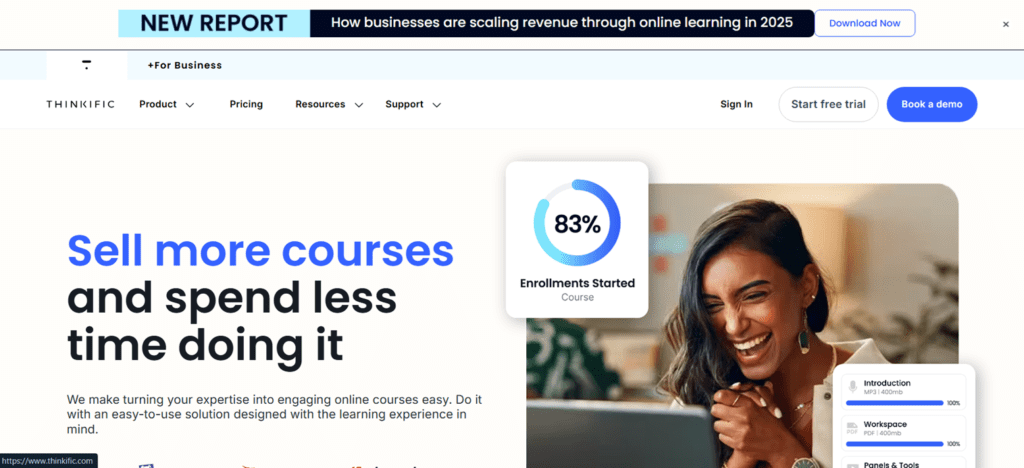
Thinkific is an excellent choice for those looking for an affordable and beginner-friendly online course platform. One of its biggest advantages is that it offers a completely free plan, allowing users to create and sell courses without transaction fees. This makes it particularly appealing for first-time course creators who want to test the waters before committing to a paid plan.
Thinkific’s drag-and-drop course builder simplifies the course creation process, making it easy to add video lessons, quizzes, assignments, and downloadable resources. However, Thinkific lacks built-in marketing automation tools, requiring users to integrate third-party solutions like Mailchimp or ConvertKit.
Best for: New course creators who need a free or low-cost solution.
Pros:
✔️ Free plan available
✔️ Drag-and-drop course builder
✔️ No transaction fees
Cons:
❌ Limited built-in marketing tools
❌ No email automation
💰 Pricing: Free plan, paid plans start at $49/month
3. Passion.io – Mobile-First Course Platform
Passion.io is a mobile-first course platform, designed for creators who want to launch courses as native mobile apps without coding. This makes it perfect for fitness trainers, life coaches, and influencers who want to engage students through interactive mobile experiences.
One of its standout features is gamification, which allows instructors to implement challenges, leaderboards, and progress tracking to boost student engagement. However, Passion.io is more expensive than traditional course platforms and offers limited desktop functionality.
Best for: Coaches and trainers who want to create mobile apps for their courses.
Pros:
✔️ No coding required for mobile apps
✔️ Gamification & interactive learning
✔️ Community & challenge features
Cons:
❌ Higher learning curve
❌ Limited desktop functionality
💰 Pricing: Starts at $79/month
4. Teachable – Affordable and User-Friendly
Teachable is another beginner-friendly platform known for its affordable pricing and ease of use. It provides a straightforward course builder, making it easy for users to upload video lessons, PDFs, and quizzes.
One of the platform’s main drawbacks is that Teachable charges a 5% transaction fee on its lowest-priced plan. Additionally, it lacks advanced sales funnel automation, requiring integrations with third-party marketing tools.
Best for: Solopreneurs and small business owners.
Pros:
✔️ Affordable pricing
✔️ Easy-to-use course builder
✔️ Integrated payment processing
Cons:
❌ Limited customization
❌ 5% transaction fee on the basic plan
💰 Pricing: Free plan, paid plans start at $39/month
5. Podia – Great for Digital Product Sellers
Podia is an excellent choice for entrepreneurs who want to sell digital products, memberships, and courses from a single platform. Unlike Kajabi, which is more marketing-focused, Podia is designed for those who want a simple, streamlined solution.
One of Podia’s standout features is that it allows users to sell courses, ebooks, and webinars without transaction fees. However, it lacks advanced marketing automation, making it less appealing for those who need email sequences and funnel optimization.
Best for: Entrepreneurs selling courses, memberships, and downloads.
Pros:
✔️ No transaction fees
✔️ Membership & community features
✔️ Unlimited courses & students
Cons:
❌ Limited course customization
❌ No advanced automation
💰 Pricing: Starts at $39/month
6. LearnDash – Best for WordPress Users
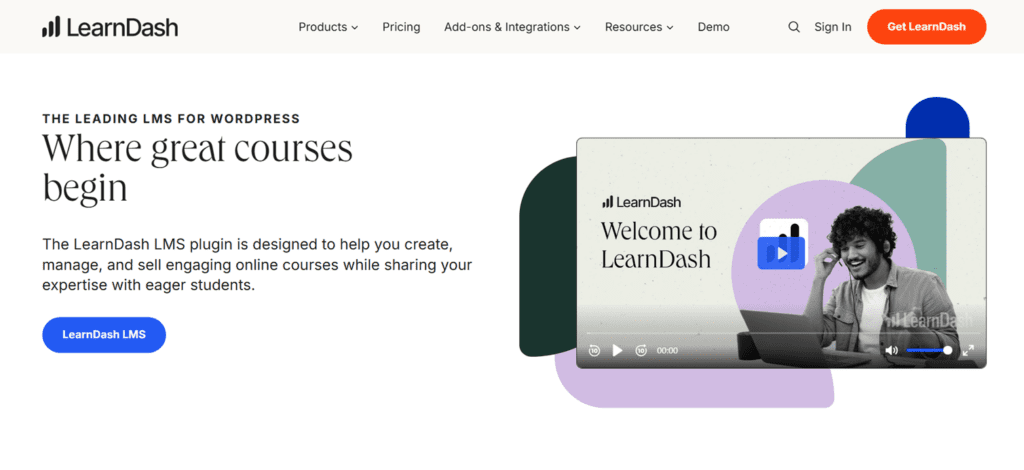
LearnDash is a WordPress-based LMS (Learning Management System) that offers full control and customization. Unlike cloud-based platforms, LearnDash requires users to host their own courses on a WordPress website, giving them full ownership of their content.
It’s best suited for advanced users and organizations that want maximum flexibility and control over their course design. However, it requires a WordPress setup, making it less suitable for beginners.
Best for: Website owners who want full control over their courses.
Pros:
✔️ Fully customizable with WordPress
✔️ No monthly fees (one-time payment)
✔️ Drip-feed content & quizzes
Cons:
❌ Requires WordPress setup
❌ No built-in hosting
💰 Pricing: Starts at $199/year
7. LearnWorlds – Interactive Learning & Gamification
LearnWorlds stands out for its interactive video features, quizzes, and gamification tools, making it ideal for educators who want to create engaging learning experiences. It also includes white-label branding, allowing users to customize their platform fully.
However, LearnWorlds is more expensive than Thinkific or Teachable, making it less accessible for budget-conscious creators.
Best for: Educators looking for interactive course experiences.
Pros:
✔️ Engaging video & gamification features
✔️ Advanced quizzes & assessments
✔️ White-label branding
Cons:
❌ More expensive than some competitors
❌ Limited free plan
💰 Pricing: Starts at $29/month
Final Verdict: Which Course Platform Should You Choose?
- Best for All-in-One Business Needs: Kajabi
- Best for Beginners & Free Users: Thinkific
- Best for Mobile Learning: Passion.io
- Best for Budget-Friendly Pricing: Teachable
- Best for Selling Digital Products & Memberships: Podia
- Best for WordPress Users: LearnDash
- Best for Engaging & Interactive Learning: LearnWorlds
Each platform has its own strengths, so the best choice depends on your needs and business goals. If you want an all-in-one business platform, Kajabi is the way to go. If you prefer a free or budget-friendly option, Thinkific or Teachable will suit you better. For mobile-first learning, Passion.io is a solid choice.
Comparison Table
| Feature | Kajabi | Thinkific | Passion.io | Teachable | Podia | LearnDash | LearnWorlds |
|---|---|---|---|---|---|---|---|
| Course Builder | Yes | Yes | No | Yes | Yes | Yes | Yes |
| Website Builder | Yes | Yes | Yes | Yes | Yes | Yes | Yes |
| Email Marketing | Yes | No | No | No | Yes | No | Yes |
| Sales Funnels | Yes | No | No | No | No | No | Yes |
| Membership Sites | Yes | Yes | No | No | Yes | Yes | Yes |
| Analytics | Yes | Yes | Yes | Yes | Yes | Yes | Yes |
| Pricing (Starting) | $149/month | Free | $97/month | Free | $39/month | $199/year | $24/month |
FAQs
1. What is the best online course platform for beginners?
Thinkific and Teachable are great for beginners due to their simple setup and affordability.
2. Which platform is best for mobile learning?
Passion.io specializes in mobile learning with its no-code app builder.
3. Can I sell digital products along with courses?
Yes, Podia and Kajabi allow you to sell courses, memberships, and digital products.
4. Which platform has the best marketing tools?
Kajabi has the most advanced marketing and automation tools for business growth.
5. Is Kajabi worth the price?
If you need an all-in-one platform with built-in marketing, funnels, and automation, Kajabi is worth it.

Romil Aggrawal is a skilled Technical Content Writer and SEO Expert with a passion for simplifying complex concepts. With years of experience in crafting engaging, user-friendly content, Romil has personally tested and reviewed a wide range of tools and software to deliver in-depth, honest insights. His expertise in SEO ensures that his content not only informs but also ranks, helping businesses reach their audience effectively. Romil's dedication to quality and attention to detail make him a trusted voice in the tech and digital marketing space.