
In today’s digital age, email marketing remains a cornerstone of effective communication between businesses and their target audiences. With countless email marketing services available, it’s crucial to choose the right one to maximize your marketing efforts. In this comprehensive guide, we’ll explore the top 7 email marketing services for 2024. From features and pricing to the pros and cons of each platform, we’ve got you covered.
Email marketing services play a pivotal role in building and nurturing customer relationships. They allow businesses to send personalized messages, automate campaigns, and analyze data for better targeting. Here, we’ll delve into the key players in the email marketing industry, highlighting their features, pros, cons, and pricing.
Table of Contents
FACTORS TO CONSIDER WHEN CHOOSING AN EMAIL MARKETING SERVICE
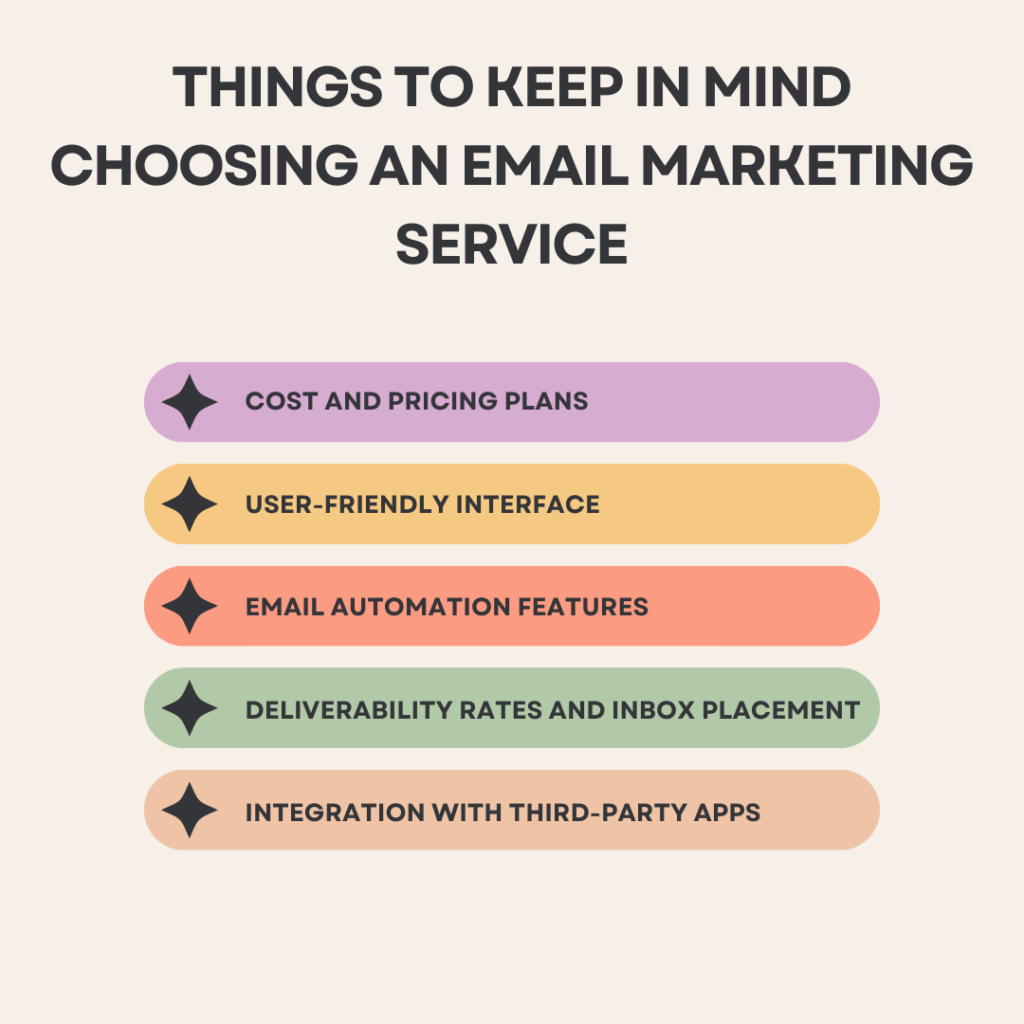
Before we delve into the list, let’s examine essential factors that should influence your choice:
1. COST AND PRICING PLANS
The cost of an email marketing service varies depending on the features and the number of subscribers. Some services offer free plans with limited functionalities, while others provide tiered pricing based on the scale of your email list.
2. USER-FRIENDLY INTERFACE
An intuitive and user-friendly interface is crucial for efficiently managing email campaigns. Look for services that offer drag-and-drop email builders, easy-to-understand analytics, and straightforward automation workflows.
3. EMAIL AUTOMATION FEATURES
Automation can significantly enhance the efficiency of your email marketing efforts. Consider services that provide automation for welcome emails, drip campaigns, personalized follow-ups, and abandoned cart reminders.
4. DELIVERABILITY RATES AND INBOX PLACEMENT
High deliverability rates are essential for ensuring that your emails reach the recipients’ inboxes and not their spam folders. Choose a service with a good reputation for deliverability and inbox placement.
5. INTEGRATION WITH THIRD-PARTY APPS
Seamless integration with other tools and platforms can streamline your marketing efforts. Look for services that can integrate with your CRM, e-commerce platform, and other essential applications.
You May Also Read:
Top 7 Email Marketing Services
1. Activecampaign
Features:
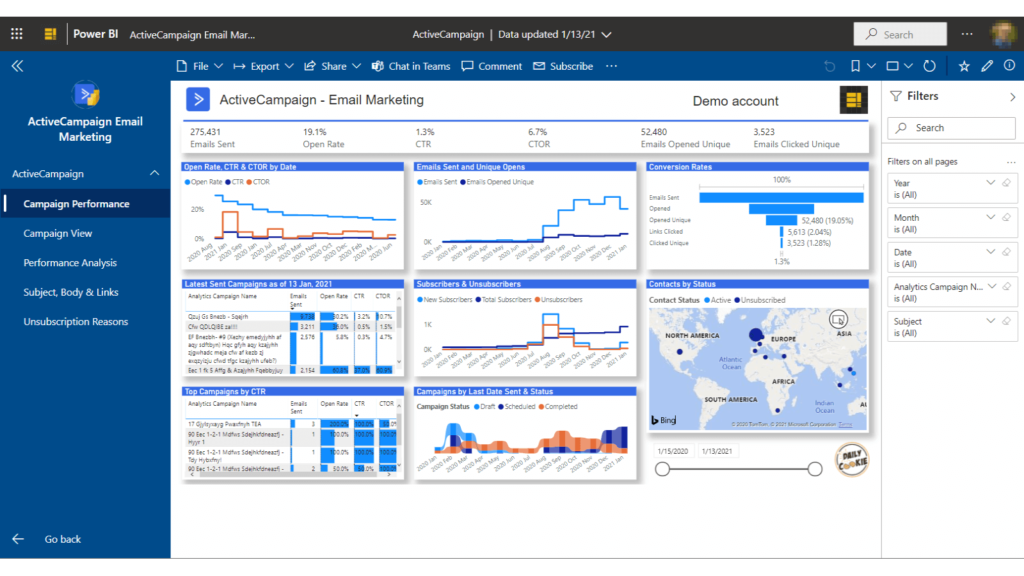
- Advanced email automation
- CRM integration
- Behavior-based segmentation
- A/B testing
- Predictive sending
- Customizable email templates
Pros:
- Robust automation workflows
- Powerful CRM features
- Exceptional deliverability rates
- Dynamic content options
- Comprehensive reporting
- Great customer support
Cons:
- Learning curve for beginners
- Can be pricey for small businesses
Pricing:
Activecampaign offers various plans starting at $9 per month, making it accessible for businesses of all sizes.
2. Aweber
Features:
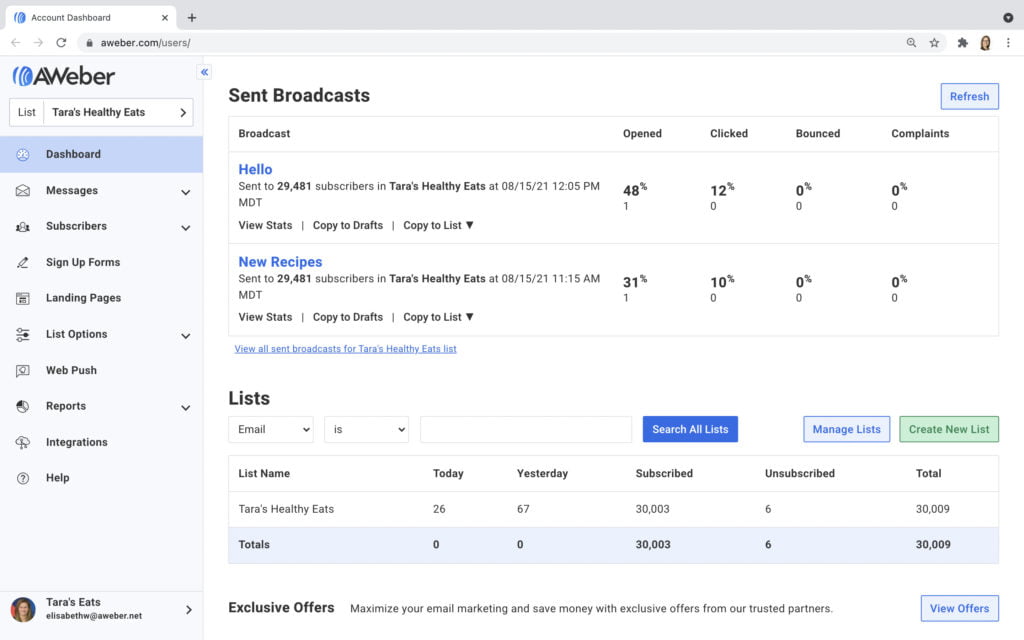
- Email automation
- Sign-up form builder
- Email templates
- Tagging and segmentation
- Analytics and reporting
- Integrations with popular apps
Pros:
- User-friendly interface
- Affordable pricing
- Strong deliverability rates
- Excellent customer support
- Suitable for beginners
Cons:
- Limited advanced features
- Not ideal for large enterprises
Pricing:
Aweber provides a free plan and premium plans starting at $19 per month.
3. Benchmark
Features:
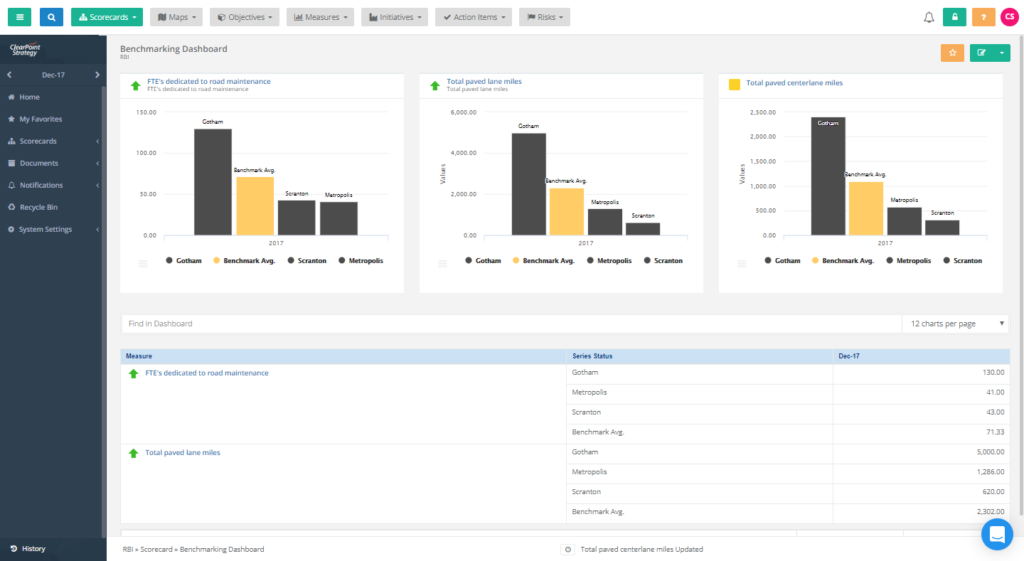
- Drag-and-drop editor
- Automation workflows
- A/B testing
- List segmentation
- Analytics and engagement reports
- Integrations with e-commerce platforms
Pros:
- Intuitive interface
- Affordable pricing
- Responsive email templates
- Strong deliverability
- 24/7 customer support
Cons:
- Limited third-party integrations
- Advanced automation may require coding knowledge
Pricing:
Benchmark offers a free plan and premium plans starting at $13.99 per month.
4. Convertkit
Features:
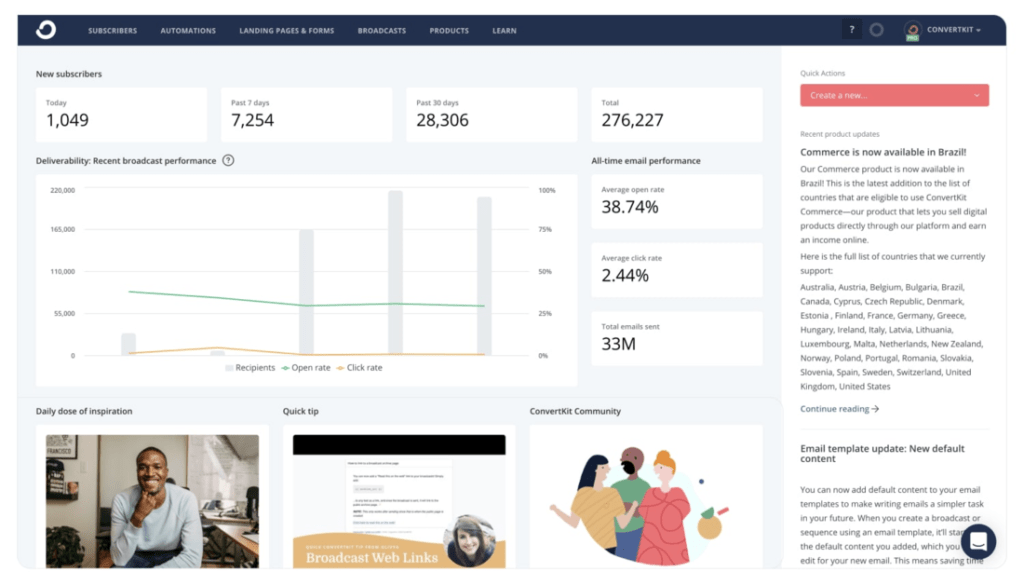
- Email automation
- Customizable opt-in forms
- Visual automation builder
- Subscriber tagging
- E-commerce integrations
- Reporting and analytics
Pros:
- Designed for content creators
- User-friendly automation builder
- Excellent deliverability
- Great customer support
- Seamless migration from other platforms
Cons:
- Limited advanced features
- Pricing can be high for larger lists
Pricing:
Convertkit’s pricing starts at $29 per month, making it an excellent choice for bloggers and content creators.
5. Brevo
Features:
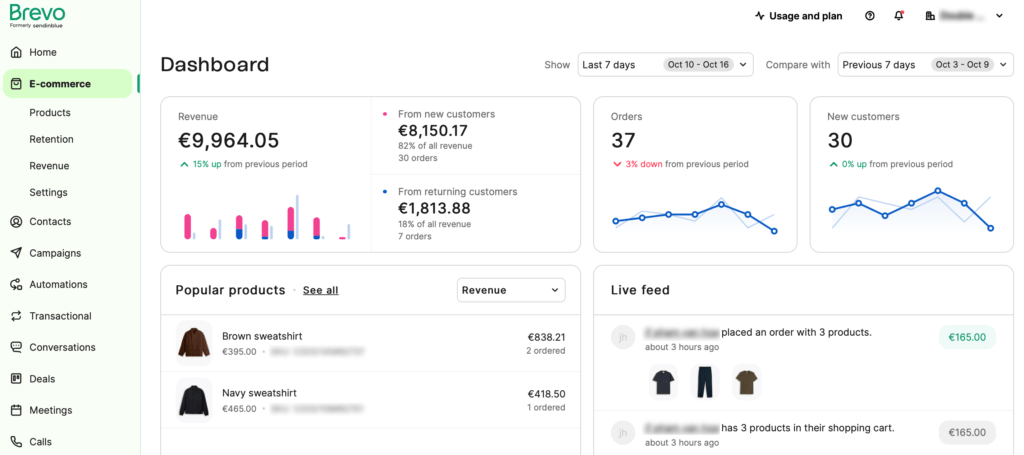
- Email marketing automation
- Customizable templates
- List management
- A/B testing
- Tracking and reporting
- Integrations with e-commerce platforms
Pros:
- Affordable pricing
- User-friendly interface
- Responsive templates
- Good deliverability
- Free plan available
Cons:
- Limited advanced features
- Smaller user base
Pricing:
Brevo offers a free plan and premium plans starting at just $9 per month, making it budget-friendly.
6. HubSpot
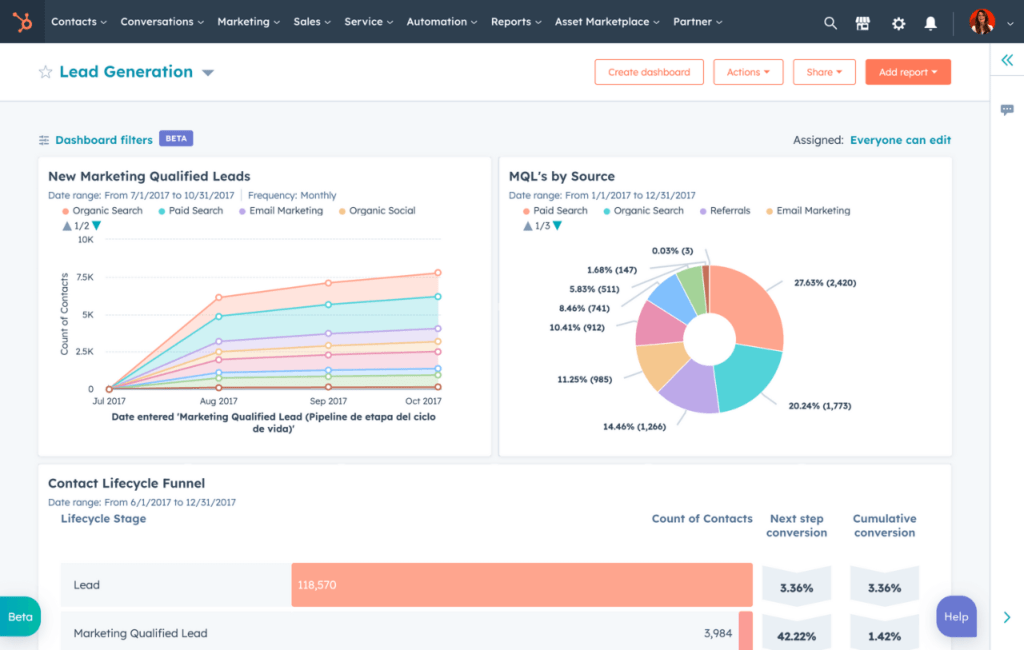
Features:
- Email marketing automation
- CRM integration
- Personalization options
- A/B testing
- Analytics and reporting
- Integration with HubSpot’s full suite
Pros:
- Seamless integration with CRM
- Robust marketing automation
- In-depth analytics
- Scalable for businesses of all sizes
- Knowledgeable customer support
Cons:
- Higher pricing
- Steeper learning curve
Pricing:
HubSpot’s email marketing starts at $45 per month, but it’s often bundled with other HubSpot tools for a complete marketing solution.
7. Omnisend
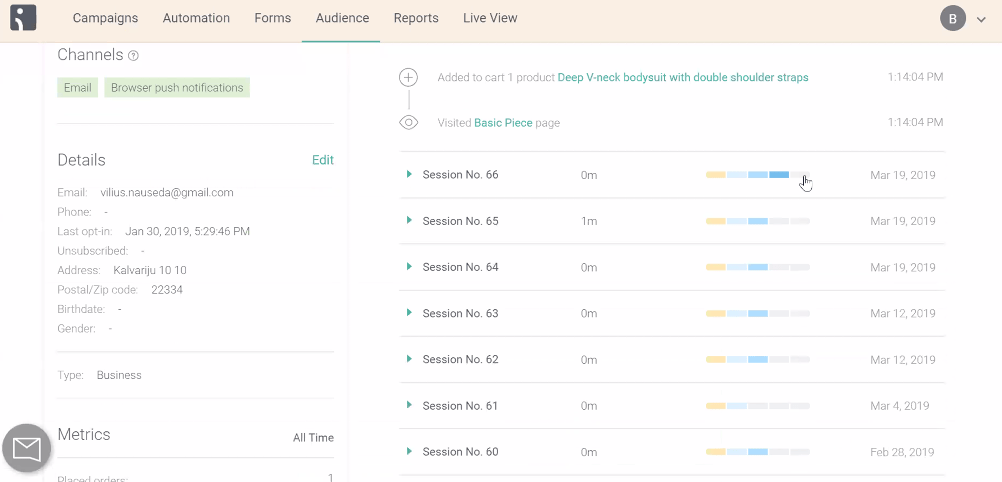
Features:
- Marketing automation
- SMS and email integration
- Segmentation and targeting
- Email capture forms
- Comprehensive reporting
- E-commerce integrations
Pros:
- Specialized for e-commerce businesses
- Multichannel marketing capabilities
- Effective automation workflows
- Great for cart abandonment campaigns
- Affordable pricing
Cons:
- Limited outside of e-commerce
- Learning curve for complex automation
Pricing:
Omnisend offers a free plan and premium plans starting at $16 per month.
Conclusion
Choosing the right email marketing service is essential for achieving your marketing goals in 2024. Each of these top 7 providers has its own strengths and weaknesses. Consider your specific needs, budget, and business size when making your decision. With the right choice, you can effectively engage your audience, boost sales, and grow your brand.
EMAIL MARKETING BEST PRACTICES
To achieve success with email marketing, follow these best practices:
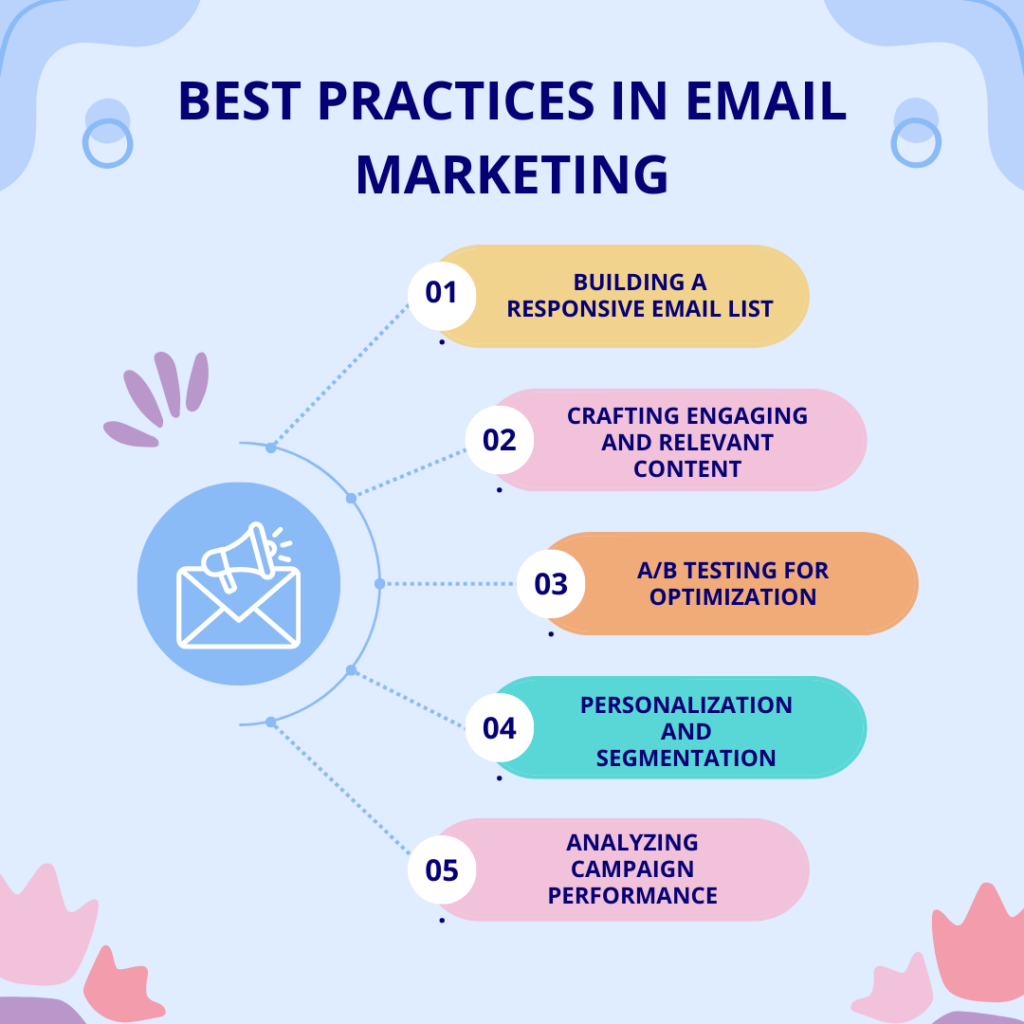
1. BUILDING A RESPONSIVE EMAIL LIST
Focus on growing a targeted and engaged email subscriber list to enhance campaign effectiveness.
2. CRAFTING ENGAGING AND RELEVANT CONTENT
Create compelling and valuable content that resonates with your audience and encourages interaction.
3. A/B TESTING FOR OPTIMIZATION
Conduct A/B tests on subject lines, content, and CTAs to identify what resonates best with your subscribers.
4. PERSONALIZATION AND SEGMENTATION
Segment your email list based on demographics, behaviors, and preferences, allowing for personalized content and better targeting.
5. ANALYZING CAMPAIGN PERFORMANCE
Regularly monitor and analyze your email campaigns’ performance to identify areas of improvement and optimize future campaigns.
FAQs
1. What is email marketing, and why is it important?
Email marketing is a digital marketing strategy that involves sending targeted and personalized emails to a group of recipients. It’s important because it allows businesses to reach their audience directly, build customer relationships, and drive sales.
2. How do I choose the best email marketing service for my business?
To choose the best email marketing service, consider your budget, the size of your email list, the features you need, and your level of technical expertise. Review the options mentioned above to make an informed decision.
3. Can I use email marketing for my small business?
Yes, email marketing can be highly effective for small businesses. Many email marketing providers offer affordable plans suitable for small budgets.
4. What are the key metrics to track in email marketing campaigns?
Key metrics include open rate, click-through rate, conversion rate, unsubscribe rate, and email list growth rate. These metrics help measure the effectiveness of your campaigns.
5. How can I improve the deliverability of my email marketing campaigns?
To improve deliverability, focus on sending relevant and engaging content, clean your email list regularly, use a reputable email marketing service, and avoid spammy tactics like buying email lists.

Romil Aggrawal is a skilled Technical Content Writer and SEO Expert with a passion for simplifying complex concepts. With years of experience in crafting engaging, user-friendly content, Romil has personally tested and reviewed a wide range of tools and software to deliver in-depth, honest insights. His expertise in SEO ensures that his content not only informs but also ranks, helping businesses reach their audience effectively. Romil's dedication to quality and attention to detail make him a trusted voice in the tech and digital marketing space.