
In today’s fast-paced business environment, efficiency and cost-effectiveness are not just goals; they are imperatives.
As companies navigate the complexities of technology integration, the allure of all-in-one software solutions becomes undeniable.
These platforms promise a streamlined approach to business operations, offering a suite of tools designed to tackle various tasks within a single, unified system.
Table of Contents
Understanding All-in-One Software

The digital landscape is evolving, with businesses seeking solutions that can keep pace with their growing needs.
All-in-One software, encompassing a range of functionalities from project management to customer relationship management, offers a holistic approach to business operations.
This shift from specialized tools to integrated platforms signifies a move towards efficiency, where seamless workflows are not just desired but essential.
| Features |
| Integrated Management Systems: Combines tools for project management, customer relationship management (CRM), and financial transactions in one interface. |
| Collaboration Tools: Offers built-in features for team communication, document sharing, and collaborative workspaces to enhance teamwork. |
| Data Analytics and Reporting: Provides analytics and reporting capabilities that aggregate data across different functions for informed decision-making. |
| Customization and Scalability: Allows businesses to customize functionalities according to their needs and scales with business growth. |
| Security Features: Incorporates advanced security measures to safeguard business data and ensure compliance with data protection regulations. |
| User-Friendly Interface: Designed for ease of use, enabling users to navigate and utilize various functionalities without extensive training. |
5 Key Strategies of All-in-One Software Solutions
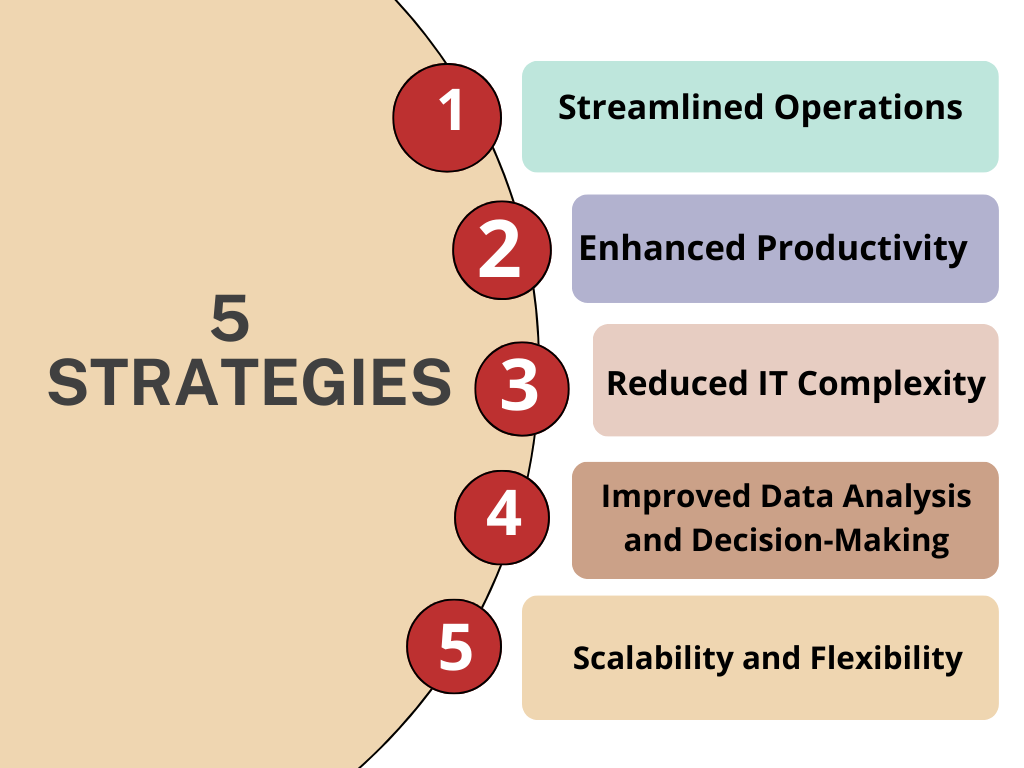
Strategy 1: Streamlined Operations
How Integration Reduces Costs
Integrating various business functions into a single platform can dramatically lower operational expenses. This consolidation eliminates the inefficiencies associated with data silos and disparate systems, ensuring that information flows seamlessly across departments. The result is a more agile, responsive business capable of making swift decisions based on comprehensive data.
Real-World Success Stories
Numerous companies have witnessed tangible cost savings and efficiency gains by embracing all-in-one software solutions. For instance, a small e-commerce startup reduced its operational costs by 30% within six months of transitioning to an all-in-one platform, highlighting the financial impact of streamlined operations.
Strategy 2: Enhanced Productivity
Tools for Every Task
All-in-one software solutions are equipped with a wide array of features designed to address the diverse needs of businesses. From project management and customer relationship management (CRM) to email marketing and financial reporting, these platforms offer tools that enhance productivity across all levels of the organization.
Strategy 3: Reduced IT Complexity
Simplifying Support and Maintenance
One of the most compelling arguments for all-in-one software solutions lies in their ability to simplify IT infrastructure.
With a single system to support and maintain, IT departments can allocate their resources more effectively, focusing on strategic initiatives rather than juggling multiple support tickets and software updates.
Strategy 4: Improved Data Analysis and Decision-Making
Comprehensive Reporting Features
All-in-one software solutions excel in aggregating data from various business functions, providing comprehensive reporting capabilities.
This unified data pool enables deeper insights and analytics, allowing companies to make data-driven decisions with greater confidence.
Examples of Data-Driven Success
Businesses leveraging all-in-one software for data analysis have achieved remarkable outcomes.
For example, a retail chain optimized its inventory management and supply chain processes based on insights gleaned from its integrated software platform, resulting in a 20% reduction in inventory costs.
Strategy 5: Scalability and Flexibility
Growing with Your Business
As businesses evolve, so do their operational needs. All-in-one software solutions are designed with scalability in mind, offering the flexibility to add or modify features as the company grows.
This adaptability ensures that businesses can continue to benefit from their software investment over the long term.
How Flexibility Leads to Savings
The ability to customize and scale software solutions according to business needs prevents overinvestment in unnecessary features, leading to more efficient use of financial resources.
Companies can therefore allocate their budgets more effectively, investing in growth and innovation rather than excess software capacity.
Conclusion
Embracing all-in-one software solutions presents a compelling opportunity for businesses to enhance their operational efficiency and financial health.
By adopting a strategic approach to technology integration, companies can unlock significant cost savings, improve productivity, and position themselves for sustainable growth.
The journey toward a more streamlined and cost-effective operation begins with the choice of the right all-in-one software solution—a choice that can redefine the trajectory of your business success.
FAQs
1. What Is All-in-One Software?
All-in-one software refers to integrated platforms that offer a wide range of business tools and functionalities within a single solution, streamlining operations and reducing costs.
2. How Can All-in-One Software Save Money?
By consolidating multiple tools into one platform, businesses can reduce subscription fees, minimize training requirements, and improve operational efficiency, leading to significant cost savings.
3. Is All-in-One Software Right for Every Business?
While all-in-one software offers numerous benefits, its suitability depends on the specific needs and scale of the business. Companies should assess their operational requirements and growth objectives when considering such solutions.
4. How to Choose the Right All-in-One Software?
Selecting the right all-in-one software involves evaluating the solution’s features, scalability, user interface, and support services. Businesses should also consider vendor reputation and customer reviews.
5. How to Implement All-in-One Software Effectively?
Effective implementation requires a strategic plan that includes staff training, data migration, and process integration. Engaging with the software vendor for support and utilizing their resources can facilitate a smooth transition.

Srishti Gaur is an accomplished SEO Associate with a strong background in content creation and software technology. With a knack for crafting strategies that drive traffic and improve search rankings, she combines her expertise in SEO with a deep understanding of tech tools and platforms. Passionate about bridging the gap between technology and impactful content, Srishti helps businesses grow their online presence and achieve measurable results.