
Ever wondered whether Systeme.io or ConvertKit is the right tool for your business? Both platforms cater to online entrepreneurs, offering marketing automation and email marketing solutions. However, they serve different types of users—one being an all-in-one business platform, while the other specializes in email marketing for content creators. Systeme.io is rated 4.8/5 for overall user satisfaction, making it a top choice for those seeking an integrated marketing solution.
Having explored both platforms extensively, I can break down their differences to help you determine which aligns with your goals.
Disclaimer: This article is based on publicly available information. Please verify pricing and features on the official websites, as updates may occur.
Table of Contents
What is Systeme.io?

Systeme.io is a robust marketing platform that provides an all-in-one solution for running an online business. Whether you need sales funnels, email automation, course hosting, or lead management, Systeme.io handles everything in a single system. It was created by Aurelian Amacker and officially launched in 2017. Since then, it has become a preferred choice for digital entrepreneurs who want a seamless business management system.
Who Should Use Systeme.io?
Systeme.io is designed for:
- Entrepreneurs managing online sales and marketing
- Course creators and coaches selling memberships
- Small businesses looking for a complete marketing solution
- Agencies managing multiple clients (with higher-tier plans)
If you want a centralized platform to manage marketing, sales, and automation, Systeme.io is a solid option.
What is ConvertKit?
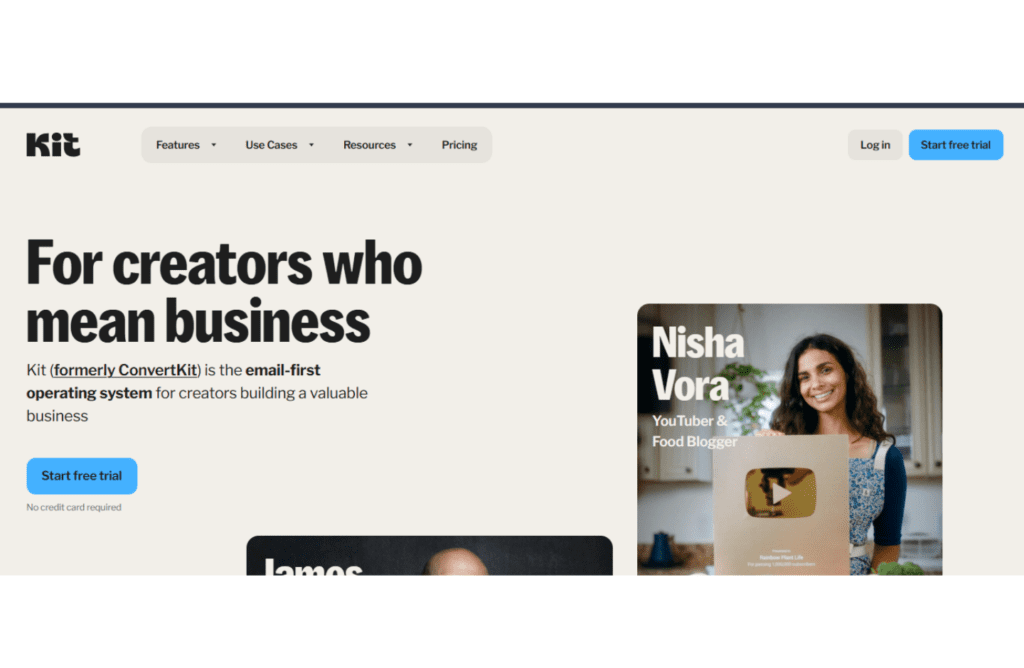
ConvertKit is an email marketing tool primarily designed for content creators, including bloggers, authors, and podcasters. It allows users to build email lists, create automation sequences, and monetize their audience through email-driven funnels. While it excels in email marketing, ConvertKit does not offer advanced CRM, funnel-building, or business management features like Systeme.io.
Who Should Use ConvertKit?
ConvertKit is perfect for:
- Bloggers and content creators who rely on email marketing
- Freelancers and small businesses focused on audience engagement
- Digital marketers who prefer simple automation over complex funnels
- Podcasters and authors looking to grow their email lists
If your primary focus is email marketing rather than full-fledged business automation, ConvertKit is a great option.
Systeme.io vs ConvertKit – Key Similarities and Differences
While Systeme.io and ConvertKit both offer marketing automation, they differ in their approach. Let’s examine their similarities and differences.
Similarities
- Both offer automation features to nurture leads and build relationships.
- Each provides email marketing tools, including segmentation and autoresponders.
- Both integrate with third-party tools to expand functionality.
- Each platform has a free trial or plan to test its features before committing.
Differences
| Feature | Systeme.io | ConvertKit |
| Ideal For | Businesses needing full marketing automation | Content creators focused on email marketing |
| Sales Funnels | Advanced funnel mapping tools | Basic sequences for email automation only |
| CRM & Lead Management | Full contact tracking and sales automation | Simple tagging and list segmentation |
| Membership & Courses | Built-in course hosting & member areas | Requires third-party tools |
| Webinar & Video Hosting | Includes built-in webinars and video hosting | No native webinar features |
| Landing Pages | Fully customizable templates | Basic landing pages with limited customization |
| Customer Support | 24/7 email support | Email support & community forum |
Why I Recommend Systeme.io?
✅ Everything in One Place
- Systeme.io isn’t just about email marketing—it’s a complete business toolkit. You get sales funnels, email automation, membership sites, webinars, and more, all under one roof. No need to juggle multiple tools!
✅ Effortless Sales Funnels
- Creating funnels with Systeme.io is super easy. You can build an entire sales process, from lead capture to checkout, without needing extra software. ConvertKit, on the other hand, only offers basic email sequences.
✅ Perfect for Course Creators & Memberships
- Selling courses or running a membership? Systeme.io lets you host everything directly—no need for third-party platforms. This makes it a great choice for coaches, educators, and digital entrepreneurs.
✅ Webinars Without Extra Cost
- Want to host live or automated webinars? Systeme.io has you covered. ConvertKit doesn’t offer this feature at all, meaning you’d have to invest in additional software.
✅ More Value for Your Money
- Systeme.io’s pricing is super competitive, especially considering all the features you get. Even on the free plan, you can build sales funnels and send emails—something ConvertKit limits unless you upgrade.
Why You Might Prefer ConvertKit?
✅ Simple & Clean Email Marketing
- ConvertKit is built for content creators who just need a solid email marketing tool. If you mainly send newsletters, set up email sequences, and don’t need advanced funnels, it’s a great choice.
✅ Beautiful & Minimalist Email Builder
- No complex drag-and-drop design tools—just clean, simple emails that focus on your message. If you want distraction-free email marketing, ConvertKit nails it.
✅ Powerful Segmentation & Tagging
- ConvertKit makes it easy to organize your subscribers with tags and segments. This is great for bloggers, authors, and podcasters who want to target the right audience.
✅ Better Third-Party Integrations
- While Systeme.io covers most needs in one platform, ConvertKit integrates seamlessly with tons of other tools, including Shopify, Teachable, and Zapier.
✅ A Free Plan That’s Great for Beginners
- ConvertKit’s free plan lets you build an email list and send broadcasts without spending a dime. If you’re just starting and only need email marketing, it’s a solid option.
Pricing and Plans
When evaluating marketing platforms, understanding their pricing structures is essential to determine which offers the best value for your business. Let’s explore the pricing plans of Systeme.io and ConvertKit in detail.
Systeme.io Pricing
Systeme.io offers a variety of pricing plans to accommodate businesses at different stages:
✅ Free Plan ($0/month): This plan includes up to 2,000 contacts, unlimited emails, 3 sales funnels, 10 sales funnel steps, 1 blog with unlimited posts, 1 course with unlimited students, and more.
✅ Startup Plan ($27/month): Offers up to 5,000 contacts, unlimited emails, 10 sales funnels, 50 sales funnel steps, 5 blogs with unlimited posts, 5 courses with unlimited students, along with automation rules and workflows.
✅ Webinar Plan ($47/month): Provides up to 10,000 contacts, unlimited emails, 50 sales funnels, 300 sales funnel steps, 20 blogs with unlimited posts, 20 courses with unlimited students, and advanced features like evergreen webinars.
✅ Unlimited Plan ($97/month): Grants unlimited contacts, emails, sales funnels, sales funnel steps, blogs, blog posts, courses, students, and all features from lower-tier plans, plus free migration and a 1-on-1 kickstart coaching session.
💡 Systeme.io also offers discounts on annual subscriptions, making it a cost-effective solution for long-term commitments.
ConvertKit Pricing
ConvertKit’s pricing is based on the number of subscribers and includes three main plans:
✅ Free Plan ($0/month): Allows up to 1,000 subscribers and includes unlimited broadcasts, forms, and landing pages, as well as audience tagging and segmentation. However, it lacks automation features.
✅ Creator Plan: Starts at $9/month for up to 300 subscribers (billed annually) and $29/month for up to 1,000 subscribers. This plan includes automation features, integrations, and premium support. Pricing increases with the number of subscribers.
✅ Creator Pro Plan: Starts at $25/month for up to 300 subscribers (billed annually) and $59/month for up to 1,000 subscribers. Includes all Creator Plan features plus advanced reporting, subscriber scoring, and priority support.
Comparison Table: Pricing
| Feature | Systeme.io | ConvertKit |
| Free Plan | Yes, includes up to 2,000 contacts and unlimited emails | Yes, includes up to 1,000 subscribers, but lacks automation features |
| Entry-Level Paid Plan | $27/month for 5,000 contacts and unlimited emails | Starts at $9/month for 300 subscribers (billed annually) or $29/month for 1,000 subscribers |
| Mid-Tier Plan | $47/month for 10,000 contacts and unlimited emails, includes webinars | Pricing varies based on subscriber count |
| Top-Tier Plan | $97/month for unlimited contacts, emails, and all features | Starts at $25/month for 300 subscribers (billed annually) or $59/month for 1,000 subscribers, includes advanced reporting |
| Additional Features | All plans include sales funnels, blogs, courses, automation, and more at no extra cost | Advanced features like subscriber scoring and priority support available in higher-tier plans |
🌟 Winner:
✅ Systeme.io is ideal for businesses seeking an all-in-one marketing solution with various pricing tiers to match different growth stages.
✅ ConvertKit is perfect for content creators and bloggers who are primarily focused on email marketing and audience engagement.
Ease of Use
When choosing a marketing platform, ease of use is crucial—especially for beginners and non-technical users. Let’s explore how Systeme.io and ConvertKit compare in terms of user experience.
Systeme.io: A Simple and Intuitive Interface
✅ Beginner-Friendly: Systeme.io is designed with simplicity in mind, making it a great option for users who want an all-in-one marketing solution without technical headaches. The dashboard is clean, well-organized, and easy to navigate, even for beginners.
✅ Drag-and-Drop Funnel Builder: Creating sales funnels, landing pages, and automation workflows is seamless with Systeme.io’s intuitive drag-and-drop editor. Unlike other platforms that require third-party integrations for funnel-building, Systeme.io offers it natively within the platform.
✅ Minimal Learning Curve: Since Systeme.io includes email marketing, automation, course hosting, and funnels under one roof, users don’t need to switch between multiple tools or learn complex setups. The platform streamlines the entire marketing process, reducing frustration.
✅ Comprehensive Tutorials and Onboarding: Systeme.io offers step-by-step guides, video tutorials, and an active community to help new users get started. Automation workflows, membership sites, and product launches can be set up with just a few clicks.
ConvertKit: Designed for Simplicity, But With Limitations
✅ Straightforward Email Marketing Interface: ConvertKit is tailored specifically for email marketing, making it one of the simplest tools to create email sequences, newsletters, and lead capture forms.
✅ Tag-Based Segmentation System: Instead of the traditional email list approach, ConvertKit uses a tag-based system to help users segment their audience efficiently. This allows better targeting for campaigns and automation.
✅ Basic Automation Setup: ConvertKit offers a visual automation builder that lets users create simple email workflows. While it’s easy to use, it lacks the advanced automation capabilities of Systeme.io, especially when it comes to sales funnels and business automation.
✅ Minimal Design Flexibility: While ConvertKit is beginner-friendly, it lacks a drag-and-drop editor for landing pages and email templates. Users looking for more design customization may find ConvertKit’s options limited compared to Systeme.io.
Comparison Table: Ease of Use
| Feature | Systeme.io | ConvertKit |
| Beginner-Friendly | ✅ Yes, designed for all-in-one simplicity | ✅ Yes, but primarily for email marketing |
| Drag-and-Drop Builder | ✅ Yes, available for funnels and pages | ❌ No, only form-based templates |
| Automation Complexity | ✅ Advanced automation (multi-step workflows, triggers, and sales funnels) | ✅ Basic email automation, but lacks full marketing workflows |
| Onboarding & Tutorials | ✅ Extensive video guides and community support | ✅ Basic tutorials, but fewer onboarding walkthroughs |
| Customization Flexibility | ✅ High—funnels, pages, automation, and courses can be customized freely | ❌ Limited—email templates and landing pages have restricted customization |
🌟 Winner: Systeme.io
✅ Systeme.io wins in terms of ease of use because it offers an all-in-one solution with an intuitive interface, a drag-and-drop funnel builder, and a powerful automation system.
✅ ConvertKit is easier for basic email marketing but lacks the flexibility needed for building funnels, advanced automation, and marketing campaigns.
Sales Funnels and Automation
A strong sales funnel and automation system can significantly increase conversions and streamline business operations. Let’s compare how well Systeme.io and ConvertKit handle automation.
Systeme.io: Full Funnel and Automation Capabilities
✅ Advanced Sales Funnel Builder: Systeme.io offers a built-in funnel builder that allows users to create multi-step sales funnels with landing pages, checkout forms, upsells, downsells, and thank-you pages—all without needing third-party tools.
✅ Multi-Channel Automation: Unlike ConvertKit, which focuses solely on email automation, Systeme.io provides:
- Email automation (drip sequences, behavioral triggers, segmentation)
- Webinar automation (for selling courses or memberships)
- Membership site automation (drip content, course access control)
- Affiliate program automation (track commissions, payouts, and referrals)
✅ Pre-Built Funnel Templates: Users can choose from ready-made funnel templates for lead generation, sales, and webinar funnels. This makes setting up a high-converting funnel fast and easy.
✅ Automation Rules & Workflows: Systeme.io lets users create conditional workflows that trigger emails, enroll users in courses, segment leads, and automate sales processes—without writing code.
ConvertKit: Simple Automation, But Limited
✅ Email-Centric Automation: ConvertKit provides a visual automation builder that allows users to create email sequences based on subscriber behavior. However, it lacks the sales funnel-building capabilities that Systeme.io offers.
✅ Tag-Based Triggers: Users can tag subscribers based on actions (e.g., opening an email, clicking a link) and send them targeted follow-ups. While effective for email marketing, ConvertKit does not support multi-channel automation like webinars or membership site triggers.
✅ No Built-In Checkout or Upsells: ConvertKit does not offer a native sales funnel system. Users must integrate third-party tools (like ThriveCart or Gumroad) to sell products or manage checkout pages.
✅ Limited Landing Page Options: ConvertKit includes basic landing pages, but these are not as customizable or conversion-focused as Systeme.io’s drag-and-drop funnel builder.
Comparison Table: Sales Funnels & Automation
| Feature | Systeme.io | ConvertKit |
| Sales Funnel Builder | ✅ Yes, includes full funnel creation | ❌ No, only email automation |
| Multi-Channel Automation | ✅ Yes, supports email, webinars, memberships, and affiliate automation | ❌ No, email-focused only |
| Pre-Built Funnel Templates | ✅ Yes, includes customizable templates | ❌ No, must create sequences manually |
| Checkout & Upsells | ✅ Yes, built-in checkout, order bumps, and upsells | ❌ No, requires third-party tools |
| Landing Page Flexibility | ✅ Yes, drag-and-drop customization | ❌ No, basic form-based landing pages |
🌟 Winner: Systeme.io
✅ Systeme.io is the clear winner when it comes to sales funnels and automation. It provides a complete marketing system that includes email automation, webinars, membership sites, affiliate tracking, and sales funnels—all in one platform.
✅ ConvertKit is great for basic email automation, but it lacks sales funnel capabilities, making it less suitable for businesses looking to automate an entire marketing workflow.
Landing Pages & Website Builder
A powerful landing page builder is essential for capturing leads, selling products, and running marketing campaigns effectively. Let’s compare Systeme.io and ConvertKit to see which one offers better landing page and website-building capabilities.
Systeme.io: Full Website and Landing Page Builder
✅ Drag-and-Drop Editor: Systeme.io provides a full-featured website and landing page builder with an easy-to-use drag-and-drop editor. This allows users to create custom designs without any coding skills.
✅ Pre-Designed Templates: Systeme.io comes with a wide selection of high-converting landing page templates designed for various use cases, such as:
- Lead generation pages
- Sales pages
- Webinar registration pages
- Thank-you pages
- Checkout pages with upsells and downsells
✅ Full Website Building: Unlike ConvertKit, which is limited to standalone landing pages, Systeme.io allows users to build complete websites with multiple pages, navigation menus, and blog functionality.
✅ Mobile-Responsive Designs: All pages built with Systeme.io are automatically optimized for mobile, ensuring a smooth user experience across different devices.
✅ SEO and Custom Domains: Systeme.io supports custom domains, meta descriptions, and SEO optimization, helping users rank higher on search engines.
✅ Built-In A/B Testing: To optimize conversions, users can create split tests (A/B tests) to compare different versions of their landing pages and improve performance.
ConvertKit: Simple Landing Pages, But No Website Builder
✅ Basic Landing Page Templates: ConvertKit offers pre-designed landing page templates, but they are much simpler compared to Systeme.io’s drag-and-drop builder.
✅ No Drag-and-Drop Functionality: ConvertKit’s landing page editor only allows users to modify text and images within a fixed layout, limiting customization.
✅ Standalone Pages Only: Unlike Systeme.io, ConvertKit does not allow users to create a full website—it only supports single landing pages.
✅ Limited Custom Domain Support: ConvertKit allows users to connect a custom domain, but lacks advanced SEO settings and flexible page structures.
✅ Mobile Optimization: ConvertKit landing pages are mobile-friendly, but since there’s no drag-and-drop builder, design customization remains restricted.
Comparison Table: Landing Pages & Website Builder
| Feature | Systeme.io | ConvertKit |
| Drag-and-Drop Builder | ✅ Yes, full customization | ❌ No, fixed template layouts |
| Pre-Designed Templates | ✅ Yes, extensive selection for different use cases | ✅ Yes, but fewer and less customizable |
| Full Website Creation | ✅ Yes, supports multi-page websites | ❌ No, only single landing pages |
| SEO & Custom Domains | ✅ Yes, advanced SEO features and custom domain support | ✅ Yes, but limited SEO capabilities |
| Mobile-Responsive | ✅ Yes, all designs are mobile-optimized | ✅ Yes, but limited customization |
| A/B Testing | ✅ Yes, built-in split testing for landing pages | ❌ No, A/B testing not available |
🌟 Winner: Systeme.io
✅ Systeme.io takes the lead because it provides a fully customizable landing page and website builder, complete with drag-and-drop functionality, SEO tools, and A/B testing.
✅ ConvertKit is useful for creating quick landing pages, but its lack of design flexibility and website-building capabilities makes it less suitable for users who need more control over their pages.
Integrations & Third-Party Tools
Integrations are important for connecting a marketing platform with other tools like payment gateways, CRM systems, and webinar software. Let’s see how Systeme.io and ConvertKit compare in terms of third-party integrations.
Systeme.io: A Self-Sufficient Platform with Essential Integrations
✅ All-in-One System: Systeme.io is designed to eliminate the need for multiple third-party integrations by offering built-in tools for email marketing, funnels, courses, and affiliate management. However, it still supports external integrations when necessary.
✅ Popular Payment Gateways: Systeme.io integrates with PayPal, Stripe, and other payment processors, allowing users to accept payments directly on their website or sales pages.
✅ Email & Webinar Integrations: While Systeme.io has its own built-in email marketing and webinar features, it also supports third-party integrations like Zapier to connect with other tools.
✅ Affiliate Tracking System: Unlike ConvertKit, which requires third-party integrations for affiliate management, Systeme.io includes a built-in affiliate system for tracking referrals and payouts.
✅ No Need for External Funnel Builders: Since Systeme.io already has a built-in sales funnel creator, users don’t need to rely on third-party tools like ClickFunnels or Leadpages.
ConvertKit: Stronger Email Integrations, But Requires External Tools
✅ Email-Focused Integrations: ConvertKit integrates seamlessly with email-related services, including webinar platforms, membership site tools, and CRM software.
✅ Third-Party Sales & Checkout Tools Needed: Unlike Systeme.io, ConvertKit does not include built-in checkout pages or a sales funnel system. Users need to integrate with platforms like ThriveCart, SamCart, or Shopify to process payments.
✅ Affiliate Tracking Requires External Tools: ConvertKit does not have a native affiliate management system, so users must integrate with tools like Rewardful or LeadDyno to set up an affiliate program.
✅ Zapier Support: ConvertKit works with Zapier, allowing users to connect with thousands of third-party apps, but this requires additional setup and, in many cases, extra costs.
✅ Limited Funnel Integrations: Since ConvertKit doesn’t have a native funnel builder, users often need additional software to create a complete marketing workflow.
Comparison Table: Integrations & Third-Party Tools
| Feature | Systeme.io | ConvertKit |
| Built-In Sales Funnels | ✅ Yes, no need for third-party tools | ❌ No, requires external software |
| Payment Gateway Support | ✅ Yes, integrates with Stripe & PayPal | ❌ No, needs third-party checkout tools |
| Affiliate Management | ✅ Yes, built-in affiliate tracking | ❌ No, requires external integrations |
| Zapier Support | ✅ Yes, allows third-party connections | ✅ Yes, allows third-party connections |
| Webinar & CRM Integrations | ✅ Yes, built-in & third-party support | ✅ Yes, integrates with various tools |
| Checkout & Upsells | ✅ Yes, built-in payment processing and upsells | ❌ No, must integrate with ThriveCart, SamCart, or Shopify |
🌟 Winner: Systeme.io
✅ Systeme.io wins because it offers built-in tools for payments, affiliate management, and sales funnels, reducing the need for third-party software.
✅ ConvertKit has good email marketing integrations, but it heavily relies on external tools for essential features like checkout pages, sales funnels, and affiliate tracking.
Pros and Cons of Systeme.io
Pros
✅ Beginner-Friendly & Easy to Use
Systeme.io is designed with simplicity in mind, making it an excellent choice for beginners. Its drag-and-drop builder allows users to create sales funnels, email sequences, and websites with ease, even if they have no prior technical skills. Unlike ConvertKit, which primarily focuses on email marketing, Systeme.io provides a complete marketing suite under one platform.
✅ Affordable Pricing with a Free Plan
One of Systeme.io’s standout advantages is its generous free plan, which includes essential marketing features like email automation, sales funnels, and course hosting. This makes it an ideal choice for solopreneurs and small businesses looking for an affordable way to scale without hefty upfront costs.
✅ All-in-One Marketing Solution
Unlike ConvertKit, which primarily focuses on email marketing, Systeme.io combines multiple marketing tools into a single platform. With Systeme.io, users get built-in email marketing, sales funnels, membership sites, automation, and course creation—eliminating the need for multiple third-party subscriptions.
✅ Built-In Affiliate Program Management
Systeme.io provides a built-in affiliate management system, allowing businesses to create and manage affiliate marketing programs without needing extra software. ConvertKit lacks this feature, requiring users to integrate external affiliate tracking tools like LeadDyno or Rewardful.
✅ Fast and Simple Sales Funnel Creation
Systeme.io offers pre-built sales funnel templates and an intuitive drag-and-drop funnel builder. This makes it easy to design and optimize high-converting sales funnels without complex integrations. ConvertKit, on the other hand, does not provide a built-in sales funnel system, requiring users to rely on third-party tools for sales automation.
✅ Unlimited Emails on All Plans
Unlike ConvertKit, which has restrictions on email sending limits depending on the plan, Systeme.io allows users to send unlimited emails, even on lower-tier plans. This makes it a cost-effective choice for businesses that heavily rely on email marketing.
✅ No Additional Transaction Fees
Systeme.io does not charge extra transaction fees on sales made through the platform, making it an excellent option for businesses selling digital products and services. ConvertKit, while offering payment processing, charges transaction fees on certain plans, increasing overall costs.
Cons
❌ Limited Advanced Customization
While Systeme.io is user-friendly, it lacks advanced customization options compared to some high-end marketing platforms. Users looking for fully customizable branding and design flexibility might find ConvertKit’s email editor and templates more visually polished.
❌ Basic Course Features
Although Systeme.io includes course hosting, it is not as advanced as dedicated course platforms like Teachable. It lacks features like certificates, quizzes, and advanced student engagement tracking, which some course creators might find essential.
❌ Limited Third-Party Integrations
Systeme.io offers built-in marketing tools, but it does not have extensive third-party integrations. If you rely on external CRMs, analytics tools, or custom apps, ConvertKit’s Zapier integrations offer more flexibility.
❌ No Mobile App
Unlike ConvertKit, which provides a more streamlined mobile experience, Systeme.io does not have a dedicated mobile app for managing marketing campaigns on the go.
Pros and Cons of ConvertKit
Pros
✅ Powerful Email Marketing Automation
ConvertKit excels in email marketing automation, allowing users to create advanced workflows with segmentation, tagging, and triggers. The visual automation builder makes it easy to design complex email sequences based on user behavior.
✅ Beautifully Designed Email Templates
ConvertKit offers professionally designed email templates and a clean email editor that supports rich formatting, personalization, and conditional content, making it ideal for businesses that rely heavily on email campaigns.
✅ Stronger Third-Party Integrations
Unlike Systeme.io, ConvertKit integrates with a wide range of third-party tools, including eCommerce platforms (Shopify, WooCommerce), CRMs, webinar platforms, and Zapier for thousands of additional integrations.
✅ Customizable Forms & Landing Pages
ConvertKit provides a variety of beautiful, high-converting landing page templates that integrate directly with its email marketing system. While Systeme.io offers landing pages, ConvertKit’s design flexibility is more advanced.
✅ Creator-Friendly Features
ConvertKit is specifically designed for creators, including bloggers, authors, and influencers. It includes unique features like paid newsletters, customizable signup forms, and content upgrades, making it an excellent choice for audience-building.
Cons
❌ No Built-In Sales Funnel Builder
Unlike Systeme.io, ConvertKit does not have a native sales funnel builder. Users must rely on third-party tools like ThriveCart or ClickFunnels to create checkout pages and upsells.
❌ Limited eCommerce Features
ConvertKit offers basic eCommerce tools for selling digital products and subscriptions, but it lacks built-in features for course creation, membership sites, and advanced checkout functionality, which Systeme.io provides.
❌ Higher Cost for Large Email Lists
ConvertKit’s pricing is based on the number of subscribers, making it more expensive as your list grows. In contrast, Systeme.io allows users to send unlimited emails at a lower price point.
❌ No Built-In Affiliate Management
ConvertKit does not offer a built-in affiliate management system, requiring users to integrate with external tools like LeadDyno, which adds extra costs and complexity.
❌ Transaction Fees on Certain Plans
ConvertKit applies transaction fees on lower-tier plans, making it less cost-effective for businesses processing high-volume sales.
Which One Should You Choose?
💡 Go with Systeme.io if:
✅ You need an affordable, all-in-one marketing platform with sales funnels, email automation, and course hosting.
✅ You’re a beginner looking for an easy-to-use platform with drag-and-drop tools.
✅ You want built-in affiliate program management without extra costs.
✅ You prefer a free plan or a lower-cost solution without email restrictions.
💡 Go with ConvertKit if:
✅ You are a content creator, blogger, or influencer who prioritizes email marketing.
✅ You need advanced automation, segmentation, and customizable email templates.
✅ You rely on third-party tools and require extensive integrations.
✅ You want creator-friendly features like paid newsletters and advanced signup forms.
Final Thoughts
Now that we’ve compared Systeme.io vs ConvertKit, the best choice depends on your business goals.
Systeme.io is best for small business owners, course creators, and entrepreneurs who want an affordable, all-in-one marketing platform with sales funnels, email automation, and affiliate management.
ConvertKit is best for bloggers, content creators, and email marketers who need advanced automation, beautiful email templates, and strong third-party integrations.
Which platform is best for you? Try their free plans and see which one fits your business best!
Frequently Asked Questions:
1. Can I transfer my existing email lists to either platform?
Absolutely, both Systeme.io and ConvertKit allow for the import of existing email lists, making the transition smooth.
2. Do Systeme.io and ConvertKit offer integrations?
Yes, both platforms support various integrations. ConvertKit integrates well with e-commerce, membership sites, and webinars, while Systeme.io offers multiple direct integrations and API access.
3. Is it possible to create membership sites on these platforms?
Systeme.io shines in this area, allowing you to create full-fledged membership sites. ConvertKit doesn’t have this feature natively but integrates with other tools.
4. Which platform is more beginner-friendly?
ConvertKit is often seen as more beginner-friendly due to its simplicity and focus on email marketing. However, Systeme.io’s all-in-one approach is also user-friendly with a slight learning curve.
5. Can I get a refund if I don’t like the service?
Both platforms offer a trial period. It’s best to try them out first, and if they’re not suitable, you can cancel before any billing period to avoid charges.

Srishti Gaur is an accomplished SEO Associate with a strong background in content creation and software technology. With a knack for crafting strategies that drive traffic and improve search rankings, she combines her expertise in SEO with a deep understanding of tech tools and platforms. Passionate about bridging the gap between technology and impactful content, Srishti helps businesses grow their online presence and achieve measurable results.