Ever wondered whether Systeme.io or HubSpot is the right tool for your business? Both platforms cater to online entrepreneurs, offering marketing automation and CRM solutions. However, they serve different types of users—one being an all-in-one business platform, while the other specializes in comprehensive customer relationship management. Having explored both platforms extensively, I can break down their differences to help you determine which aligns with your goals.
Disclaimer: This article is based on publicly available information. Please verify pricing and features on the official websites, as updates may occur.
Table of Contents
Systeme.io vs HubSpot: Quick & Simple Comparison
| Feature | Systeme.io | HubSpot |
| Ease of Use | Beginner-friendly with intuitive interface | Can be complex due to extensive features |
| Onboarding | Tutorials and step-by-step guides available | Comprehensive onboarding resources and support |
| Sales Funnels | Built-in funnel builder with templates | Requires integration with third-party tools |
| Marketing Automation | Email marketing, sales funnels, and automation rules | Advanced automation across multiple channels |
| CRM & Lead Management | Basic contact management with tagging and segmentation | Robust CRM with detailed lead management and tracking |
| Membership & Courses | Integrated course and membership site creation | Requires third-party integrations |
| Webinars | Evergreen webinars supported | No native webinar hosting; requires integration |
| Landing Pages | Drag-and-drop builder with customizable templates | Advanced landing page builder with extensive customization |
| Integrations | Limited native integrations; supports Zapier for more | Extensive native integrations with a wide range of third-party apps |
| Customer Support | 24/7 email support | Email and phone support, with additional options depending on the plan |
| Pricing | Free plan available; paid plans starting at $27/month | Free plan available; paid plans starting at $50/month |
| Best For | Entrepreneurs, small businesses, and course creators seeking an all-in-one solution | Medium to large businesses requiring advanced CRM and marketing capabilities |
What is Systeme.io?

Systeme.io is a comprehensive platform designed to provide entrepreneurs and small businesses with all the tools necessary to manage and grow their online presence. Launched with the goal of simplifying digital marketing, Systeme.io offers features such as sales funnels, email marketing, online course hosting, and automation—all within a single platform. This integration allows users to streamline their operations without the need for multiple subscriptions or complex integrations.
Who Should Use Systeme.io?
Systeme.io is ideal for:
- Entrepreneurs and small business owners seeking an affordable, all-in-one marketing solution.
- Course creators and coaches looking to host and sell online courses without relying on multiple platforms.
- Individuals and businesses aiming to build and manage sales funnels with ease.
- Users who prefer a straightforward interface without sacrificing essential marketing functionalities.
What is HubSpot?
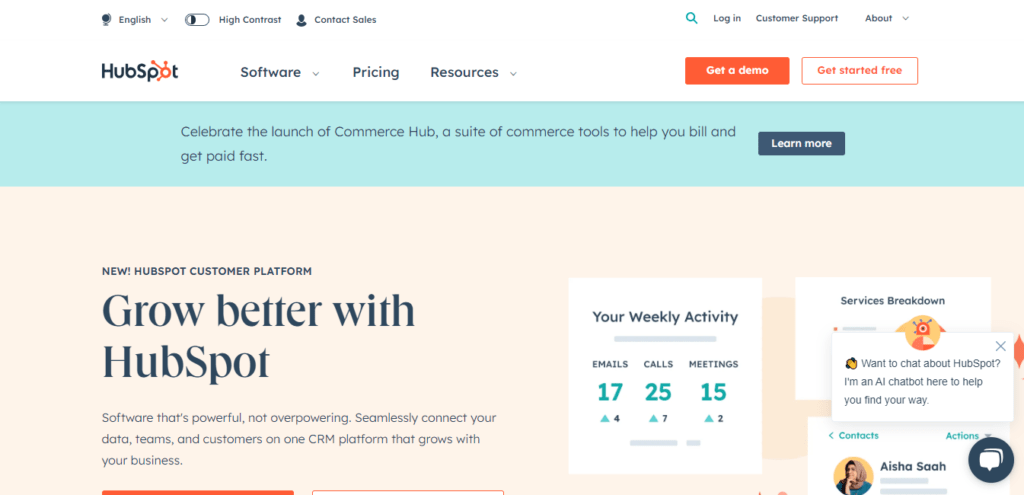
HubSpot is a leading customer relationship management (CRM) platform that offers a suite of tools designed to help businesses grow and manage their customer interactions effectively. With dedicated hubs for marketing, sales, service, content management, and operations, HubSpot provides a comprehensive ecosystem for businesses to attract, engage, and delight customers. Its robust features cater to the needs of growing businesses looking for scalable solutions.
Who Should Use HubSpot?
HubSpot is suitable for:
- Medium to large businesses requiring advanced CRM capabilities and detailed customer insights.
- Marketing teams looking for sophisticated automation tools and analytics.
- Sales teams needing comprehensive lead management and tracking functionalities.
- Organizations seeking a scalable platform that can integrate seamlessly with various third-party applications.
Key Similarities and Differences
While both Systeme.io and HubSpot offer marketing automation and CRM functionalities, their approaches and target audiences differ. Let’s delve into their similarities and differences.
Similarities
- Automation Features: Both platforms provide automation tools to nurture leads and streamline marketing efforts.
- Email Marketing: Each offers email marketing capabilities, including segmentation and campaign management.
- Landing Pages: Both Systeme.io and HubSpot allow users to create landing pages to capture leads and promote products or services.
- Free Plans: Both platforms offer free plans, enabling users to test features before committing to a paid subscription.
Differences
| Feature | Systeme.io | HubSpot |
| Ideal For | Entrepreneurs and small businesses seeking an all-in-one solution | Medium to large businesses requiring advanced CRM and marketing capabilities |
| Sales Funnels | Built-in funnel builder with templates | Requires integration with third-party tools |
| CRM & Lead Management | Basic contact management with tagging and segmentation | Robust CRM with detailed lead management and tracking |
| Membership & Courses | Integrated course and membership site creation | Requires third-party integrations |
| Webinars | Supports evergreen webinars | No native webinar hosting; requires integration |
| Integrations | Limited native integrations; supports Zapier for more | Extensive native integrations with a wide range of third-party apps |
| Customer Support | 24/7 email support | Email and phone support, with additional options depending on the plan |
Pricing and Plans
When evaluating the pricing structures of Systeme.io and HubSpot, it’s essential to recognize that both platforms cater to different business needs. Systeme.io offers an all-in-one marketing solution, while HubSpot provides a comprehensive CRM with specialized hubs for marketing, sales, service, content, operations, and commerce. Let’s delve into their pricing details to help you determine which aligns best with your business objectives.
Systeme.io Pricing
Systeme.io provides four distinct pricing plans, including a free option, each designed to accommodate businesses at various stages:
| Plan | Monthly Cost | Annual Cost (per month) | Contacts | Sales Funnels | Blogs | Courses | Automation Rules | Custom Domains | Additional Features |
| Free | $0 | $0 | 2,000 | 3 | 1 | 1 | 1 | 1 | Unlimited emails, file storage, students |
| Startup | $27 | $19 | 5,000 | 10 | 5 | 5 | 10 | 3 | Free migration |
| Webinar | $47 | $33 | 10,000 | 50 | 20 | 20 | 100 | 10 | Evergreen webinars |
| Unlimited | $97 | $69 | Unlimited | Unlimited | Unlimited | Unlimited | Unlimited | Unlimited | 1-on-1 kickstart coaching session |
Note: Annual plans offer a discount, reducing the monthly equivalent cost.
HubSpot Pricing
HubSpot’s pricing is structured around its various “Hubs,” each focusing on different aspects of business operations. Here’s an overview of the primary hubs:
Marketing Hub:
| Plan | Monthly Cost (billed annually) | Contacts Included | Additional Features |
| Free | $0 | 2,000 | Forms, email marketing, landing pages, ad management |
| Starter | $50 | 1,000 | Everything in Free, plus marketing automation, ad retargeting |
| Professional | $800 | 2,000 | Everything in Starter, plus advanced automation, custom reporting, A/B testing |
| Enterprise | $3,200 | 10,000 | Everything in Professional, plus custom events, predictive lead scoring, advanced permissions |
Additional marketing contacts can be purchased in increments, with pricing varying based on the plan.
Sales Hub:
| Plan | Monthly Cost (billed annually) | Users Included | Additional Features |
| Free | $0 | Unlimited | Contact management, deal tracking, email scheduling |
| Starter | $50 | 2 | Everything in Free, plus meeting scheduling, email tracking, calling |
| Professional | $500 | 5 | Everything in Starter, plus sales automation, forecasting, custom reporting |
| Enterprise | $1,200 | 10 | Everything in Professional, plus playbooks, custom objects, advanced permissions |
Additional users can be added at varying costs depending on the plan.
Service Hub:
| Plan | Monthly Cost (billed annually) | Users Included | Additional Features |
| Free | $0 | Unlimited | Ticketing, live chat, team email |
| Starter | $50 | 2 | Everything in Free, plus conversational bots, meeting scheduling |
| Professional | $500 | 5 | Everything in Starter, plus help desk automation, knowledge base, customer feedback surveys |
| Enterprise | $1,200 | 10 | Everything in Professional, plus playbooks, custom objects, advanced permissions |
Additional users can be added at varying costs depending on the plan.
Pricing Comparison: Systeme.io vs. HubSpot
| Feature | Systeme.io | HubSpot |
| Free Plan | Yes (Includes 2,000 contacts, 3 sales funnels) | Yes (Limited features across all hubs) |
| Starting Price | $27/month (Startup Plan) | $50/month (Starter Plan for Marketing, Sales, or Service Hub) |
| Annual Discount | Yes (Up to 30% discount on annual plans) | Yes (Discounts available on annual billing) |
| Most Popular Plan | $47/month (Webinar Plan) | $800/month (Professional Plan for Marketing Hub) |
| Top-Tier Plan | $97/month (Unlimited Plan) | $3,200/month (Enterprise Plan for Marketing Hub) |
| Hosting Included | Yes (Built-in hosting for all plans) | No (Requires separate hosting for CMS) |
| Sales Funnels | Yes (Unlimited in higher plans) | No (Requires integration with third-party tools) |
| Email Marketing | Yes (Built-in automation) | Yes (Available in Marketing Hub plans) |
| Webinar Feature | Yes (Included in Webinar & Unlimited plans) | No (Requires third-party integrations) |
| Custom Domains | Yes (1 on Free Plan, more on paid plans) | Yes (Available with CMS Hub or as add-on) |
| Ease of Use | Simple, all-in-one marketing tool | Comprehensive CRM with a steeper learning curve |
| Best For | Marketers, entrepreneurs, course creators | Medium to large businesses seeking a robust CRM with specialized hubs |
🌟 Winner:
- Systeme.io is ideal for small to medium-sized businesses seeking an affordable, all-in-one marketing solution with features like sales funnels, email marketing, and webinars.
- HubSpot is better suited for medium to large businesses that require a comprehensive CRM with specialized hubs for marketing, sales, and service, and are prepared to invest in a more premium solution.
Please note that pricing and features are subject to change. For the most current information, it’s recommended to visit the official Systeme.io and HubSpot websites.
User Experience & Ease of Use
Your marketing platform should be easy to navigate, whether you’re a beginner or an experienced marketer. Let’s compare how Systeme.io and HubSpot perform in terms of user-friendliness.
Systeme.io
Systeme.io is designed with simplicity in mind, making it a great choice for beginners. The dashboard is clean and intuitive, allowing users to quickly navigate between different features such as email marketing, funnels, automation, and membership sites. The drag-and-drop editor for landing pages and emails ensures that users with no technical knowledge can create high-converting assets without hassle.
One of the standout features of Systeme.io is its step-by-step onboarding process, which guides users through setting up their first funnel, email sequence, and automation. Since it’s an all-in-one platform, everything is in one place, reducing the need for complex integrations or external tools. However, as with any comprehensive platform, there might be a slight learning curve when exploring its advanced automation features.
HubSpot
HubSpot has a more complex interface due to its extensive features. While it provides powerful CRM and marketing tools, the learning curve is significantly steeper compared to Systeme.io. The dashboard is feature-rich but can feel overwhelming, especially for users who are new to CRM systems or inbound marketing.
HubSpot does provide onboarding tutorials, courses, and certification programs through HubSpot Academy, which helps new users get accustomed to the platform. However, because HubSpot is modular (meaning you need different “Hubs” for different functions like email marketing, automation, and CRM), users often find themselves navigating through multiple dashboards, which can be confusing.
Comparison Table: User Experience
| Feature | Systeme.io | HubSpot |
| Ease of Use | More user-friendly and simple to navigate ✅ | More complex due to extensive features ❌ |
| Dashboard Design | Minimalist and efficient ✅ | Advanced but overwhelming for beginners ❌ |
| Learning Curve | Lower learning curve ✅ | Requires training to master all features ❌ |
| Onboarding Support | Tutorials and step-by-step guides ✅ | HubSpot Academy courses and documentation ✅ |
🌟 Winner: Systeme.io
If you prefer an easy-to-use marketing tool with minimal setup time, Systeme.io is the better choice. However, if you’re looking for a highly scalable CRM solution and are willing to invest time in learning, HubSpot is worth considering.
Sales Funnel & Landing Page Builder
A strong sales funnel and landing page builder is essential for online marketing success. Let’s analyze what Systeme.io and HubSpot offer in this regard.
Systeme.io
Systeme.io comes with a built-in funnel builder that allows users to create unlimited sales funnels (on higher plans) without needing additional tools. It offers a drag-and-drop editor for building landing pages, opt-in pages, checkout pages, and thank-you pages.
Key benefits include:
- Pre-designed funnel templates for different business models (coaching, eCommerce, digital courses).
- A/B testing capabilities to optimize conversions.
- Seamless checkout pages with order bumps and upsells.
- Automated follow-up emails directly linked to the funnel.
The simplicity of Systeme.io’s funnel builder makes it perfect for beginners and small businesses that need an efficient way to generate leads and sales.
HubSpot
HubSpot does not offer a built-in funnel builder like Systeme.io. Instead, it provides landing page creation within the Marketing Hub. The landing page editor is robust, allowing for deep customization, but it requires third-party integrations to build complete sales funnels.
HubSpot’s strengths include:
- Highly customizable landing pages with dynamic content.
- A/B testing and advanced analytics for optimization.
- Integration with CRM for lead tracking and nurturing.
- Smart content personalization based on user behavior.
However, if you need to create multi-step funnels with upsells, downsells, and automated follow-ups, you will need third-party tools like ClickFunnels or Zapier to connect the necessary steps.
Comparison Table: Sales Funnels & Landing Pages
| Feature | Systeme.io | HubSpot |
| Sales Funnel Builder | Built-in, unlimited on higher plans ✅ | Requires third-party tools ❌ |
| Landing Page Builder | Drag-and-drop, beginner-friendly ✅ | Advanced with deep customization ✅ |
| A/B Testing | Available on all paid plans ✅ | Available on higher-tier plans ✅ |
| Checkout & Upsells | Integrated with the funnel ✅ | Requires external payment processor ❌ |
| CRM Integration | Basic CRM built-in ✅ | Advanced CRM with automation ✅ |
🌟 Winner: Systeme.io
If you need a complete sales funnel solution, Systeme.io is the clear winner. If your primary need is landing page customization with CRM integration, HubSpot is a good choice but requires extra tools for full funnel-building capabilities.
Email Marketing & Automation
Automation and email marketing play a crucial role in nurturing leads and driving conversions. Here’s how Systeme.io and HubSpot compare.
Systeme.io
Systeme.io provides built-in email marketing with automation features across all plans, including the free plan. Users can:
- Create email campaigns and automated sequences.
- Segment subscribers based on behavior.
- Trigger automations based on customer actions.
- Send unlimited emails on all paid plans.
The automation workflow is simple yet effective, making it ideal for course creators, marketers, and small businesses.
HubSpot
HubSpot offers more advanced email marketing features but only on paid plans. The free plan allows basic email marketing, but advanced automation and segmentation require the Marketing Hub Starter or higher. Key features include:
- Highly customizable email templates and drag-and-drop editor.
- Behavior-based triggers for automation.
- Personalized content based on CRM data.
- AI-powered email optimization.
While HubSpot is powerful, its automation features are only available on higher plans, making it more expensive than Systeme.io.
Comparison Table: Email Marketing & Automation
| Feature | Systeme.io | HubSpot |
| Email Marketing | Built-in, unlimited on paid plans ✅ | Available but with restrictions ❌ |
| Automation Workflows | Simple but effective ✅ | Advanced but requires higher plans ❌ |
| Segmentation | Behavior-based tagging ✅ | Advanced segmentation with CRM ✅ |
| A/B Testing | Available ✅ | Only in Marketing Hub Professional ❌ |
| AI Optimization | No AI features ❌ | AI-powered content recommendations ✅ |
🌟 Winner: Systeme.io
For businesses looking for affordable, built-in email marketing with automation, Systeme.io is the better option. HubSpot is more powerful but significantly more expensive, making it ideal for enterprise-level users.
Integrations & Third-Party Compatibility
A marketing platform should integrate smoothly with other tools to enhance your business workflow. Let’s compare how Systeme.io and HubSpot perform in terms of third-party integrations.
Systeme.io
Systeme.io follows an all-in-one approach, meaning it minimizes the need for third-party integrations. However, it still offers key integrations with payment processors and other tools, such as:
- Stripe & PayPal for payment processing.
- Zapier (connects to thousands of other apps).
- Mailing services like SendGrid for email delivery.
- Webinar tools for live events.
- Google Analytics & Facebook Pixel for tracking.
While Systeme.io covers most business needs natively (funnels, email marketing, courses, automation, etc.), it does not have as many direct third-party integrations as HubSpot.
HubSpot
HubSpot excels in integrations with a huge marketplace of over 1,000+ third-party apps, including:
- CRM & Sales tools (Salesforce, Pipedrive, Zoho CRM).
- Email marketing services (Mailchimp, ActiveCampaign).
- eCommerce platforms (Shopify, WooCommerce).
- Customer support tools (Zendesk, Intercom).
- Analytics & tracking tools (Google Analytics, Hotjar).
Since HubSpot is more modular, many users rely on third-party tools to extend its functionality, whereas Systeme.io is designed to work independently.
Comparison Table: Integrations
| Feature | Systeme.io | HubSpot |
| Built-in Features | All-in-one (less need for integrations) ✅ | Requires third-party tools for full functionality ❌ |
| Payment Processing | Stripe, PayPal ✅ | Stripe, PayPal, multiple gateways ✅ |
| CRM Integrations | Basic built-in CRM ✅ | Advanced CRM, integrates with Salesforce ✅ |
| Email Marketing | Built-in ✅ | Third-party integrations needed ❌ |
| eCommerce Compatibility | Basic checkout pages ✅ | Full eCommerce integrations ✅ |
| API Access | Limited API for custom use ❌ | Advanced API access for developers ✅ |
🌟 Winner: HubSpot
If you need deep integrations with multiple business tools, HubSpot is the clear winner. However, Systeme.io is better if you want an all-in-one solution without relying on third-party apps.
Customer Support & Community
Strong customer support can make or break your experience with a platform. Let’s see how Systeme.io and HubSpot compare.
Systeme.io
Systeme.io offers reliable customer support, but it’s more limited compared to HubSpot. Available support options include:
- 24/7 email support for all users.
- Live chat support (only for paid users).
- Comprehensive help center & video tutorials.
- Active Facebook community where users can seek help from peers.
While Systeme.io’s support team is helpful, it doesn’t provide phone support and live chat is only available on paid plans.
HubSpot
HubSpot is known for its exceptional customer support with multiple channels, including:
- Live chat, email, and phone support (depending on the plan).
- Dedicated account managers for enterprise users.
- Extensive knowledge base, blogs, and free courses via HubSpot Academy.
- Huge online community for networking and troubleshooting.
However, HubSpot’s best support options (phone & priority support) are only available on higher-tier paid plans, making it less accessible for small businesses.
Comparison Table: Customer Support
| Feature | Systeme.io | HubSpot |
| 24/7 Email Support | Yes ✅ | Yes ✅ |
| Live Chat | Paid plans only ❌ | Available on most paid plans ✅ |
| Phone Support | No phone support ❌ | Available on higher plans ✅ |
| Help Center | Knowledge base & video tutorials ✅ | Extensive knowledge base & HubSpot Academy ✅ |
| Community Forum | Active Facebook group ✅ | Large community & user groups ✅ |
🌟 Winner: HubSpot
If you require priority support, phone assistance, and live chat, HubSpot is the winner. However, if you’re looking for cost-effective support, Systeme.io provides good service at a lower price.
Analytics & Reporting
Data-driven decisions are crucial for marketing success. Let’s see how Systeme.io and HubSpot handle analytics and reporting.
Systeme.io
Systeme.io provides basic analytics, including:
- Sales and revenue tracking.
- Funnel performance analysis (conversion rates, drop-off points).
- Email marketing reports (open rates, click-through rates).
- Affiliate program tracking (for users running affiliate marketing).
While sufficient for small businesses, Systeme.io lacks advanced analytics like custom reports, attribution modeling, and deep CRM insights.
HubSpot
HubSpot offers advanced reporting and analytics, including:
- Customizable dashboards with in-depth metrics.
- Marketing attribution reports to track customer journeys.
- Revenue and sales forecasting based on CRM data.
- AI-powered insights for better decision-making.
- Real-time tracking for email, ads, and website performance.
However, HubSpot’s advanced analytics features are only available in premium plans, making it expensive for small businesses.
Comparison Table: Analytics & Reporting
| Feature | Systeme.io | HubSpot |
| Sales Tracking | Basic sales reports ✅ | Advanced CRM-based reporting ✅ |
| Funnel Analytics | Basic conversion tracking ✅ | Detailed funnel reports with attribution ✅ |
| Email Performance | Open & click-through rates ✅ | Advanced email analytics with AI insights ✅ |
| Custom Reports | No ❌ | Yes, on higher plans ✅ |
| CRM Insights | Limited ❌ | AI-powered and detailed ✅ |
🌟 Winner: HubSpot
If you need enterprise-level analytics with deep insights, HubSpot wins. However, Systeme.io provides sufficient tracking for small businesses without additional costs.
Systeme.io: Pros & Cons
✅ Pros of Systeme.io
✔ All-in-One Platform: Combines email marketing, sales funnels, course hosting, and automation without needing extra tools.
✔ Affordable Pricing: Offers a forever free plan and paid plans that are significantly cheaper than HubSpot.
✔ Unlimited Emails on All Plans: No extra cost for sending emails, unlike many other platforms.
✔ Simple & Beginner-Friendly: The user-friendly dashboard makes it easy for non-tech-savvy users to get started.
✔ No Need for Third-Party Integrations: Comes with built-in features for sales funnels, membership sites, and affiliate marketing.
✔ Built-in Affiliate Program: Allows users to set up their own affiliate program without additional tools.
✔ Lifetime Free Plan: Includes 2,000 contacts, 3 sales funnels, 1 blog, and basic automation, making it ideal for beginners.
❌ Cons of Systeme.io
✖ Limited Customization: While easy to use, its design and branding options are more restricted compared to HubSpot.
✖ Fewer Integrations: Does not offer as many third-party integrations, relying more on built-in features.
✖ Basic Analytics: Lacks advanced reporting tools like AI-driven insights and detailed attribution tracking.
✖ No Phone Support: Customer service is limited to email and live chat (only for paid plans).
✖ Less Scalability for Large Businesses: While perfect for small to mid-sized businesses, it lacks some advanced enterprise-level CRM and automation features.
HubSpot: Pros & Cons
✅ Pros of HubSpot
✔ Powerful CRM & Marketing Automation: One of the best platforms for tracking leads, nurturing customers, and automating sales processes.
✔ Extensive Integrations: Connects with 1,000+ third-party apps (Salesforce, Shopify, Mailchimp, etc.).
✔ Advanced Analytics & Reporting: Provides in-depth insights, AI-powered analytics, and custom reports for better decision-making.
✔ Scalable for Large Businesses: Ideal for companies needing complex workflows, sales pipelines, and large marketing campaigns.
✔ Comprehensive Customer Support: Includes live chat, phone support, and a dedicated account manager on higher plans.
✔ Free CRM Plan: HubSpot’s free CRM includes unlimited users, contact management, email tracking, and live chat.
❌ Cons of HubSpot
✖ Expensive Paid Plans: The free plan is great, but the premium plans can be costly (ranging from $50 to $3,600 per month).
✖ Steep Learning Curve: Due to its extensive features, beginners may take longer to master the platform.
✖ Extra Costs for Scaling: Many features like advanced automation, reporting, and API access require additional add-ons, making it costly over time.
✖ Email Marketing Limits on Free Plan: Unlike Systeme.io, HubSpot’s free plan has restrictions on the number of marketing emails you can send.
✖ Over-Reliance on Integrations: While flexible, many essential functions require third-party integrations, which may add to the cost.
Best For: Who Should Use Each Platform?
Finally, let’s determine which platform is better suited for different types of businesses.
Systeme.io is Best For:
✅ Entrepreneurs and small business owners who need an all-in-one marketing solution.
✅ Course creators and coaches who want to sell online courses and memberships.
✅ Affiliate marketers looking for a platform with built-in affiliate management.
✅ Users who prefer simplicity and don’t want to rely on multiple third-party tools.
HubSpot is Best For:
✅ Medium to large businesses needing a powerful CRM with deep marketing automation.
✅ Sales teams that require detailed pipeline tracking and forecasting.
✅ Companies with large budgets that can afford premium features.
✅ Businesses that need deep integrations with multiple third-party services.
Final Verdict
If you’re a small business owner, entrepreneur, or digital marketer looking for an affordable, easy-to-use platform, Systeme.io is the winner. However, if you need a powerful CRM with enterprise-level features and have the budget to invest, HubSpot is the better choice.
No matter which platform you choose, the most important factor is selecting the right tool that aligns with your business goals and growth strategy. 🚀
Would you like help setting up your account or exploring alternatives? Let me know!
FAQs
1. Is there a free trial for Systeme.io?
Yes, Systeme.io offers a free 14-day trial, allowing users to explore its features without commitment.
2. Can small businesses benefit from HubSpot?
Absolutely, HubSpot offers a free plan and affordable starter options, making it accessible and beneficial for small businesses.
3. Which platform is better for email marketing, Systeme.io, or HubSpot?
Both platforms offer robust email marketing features; your choice should depend on your overall marketing strategy.
4. Do I need technical skills to use Systeme.io?
No, Systeme.io is designed to be user-friendly and accessible to entrepreneurs and small businesses.
5. Is HubSpot suitable for e-commerce businesses?
Yes, HubSpot offers e-commerce integrations and features, making it a viable option for e-commerce-focused businesses.

Srishti Gaur is an accomplished SEO Associate with a strong background in content creation and software technology. With a knack for crafting strategies that drive traffic and improve search rankings, she combines her expertise in SEO with a deep understanding of tech tools and platforms. Passionate about bridging the gap between technology and impactful content, Srishti helps businesses grow their online presence and achieve measurable results.