

Having thoroughly used and tested both Kartra and HubSpot, I can confidently provide a detailed comparison of these two CRM and marketing automation platforms.
Research shows that up to 55% of marketing professionals and executives consider integration with existing systems, such as customer relationship management (CRM), to be the most vital feature of marketing automation software. Additionally, lead qualification and scoring rank as the second most important functionalities of any top-tier marketing automation tool.
Fortunately, both Kartra and HubSpot excel in these areas, offering robust marketing automation features within their platforms.
In this analysis, I will break down their key features, similarities, differences, pricing structures, advantages, and drawbacks—giving you all the information needed to determine which platform best supports your business growth online.
| Disclaimer:This article is for informational purposes only. Verify features and pricing on the official HubSpot and Kartra websites as they may change over time. |
Table of Contents
What is HubSpot?
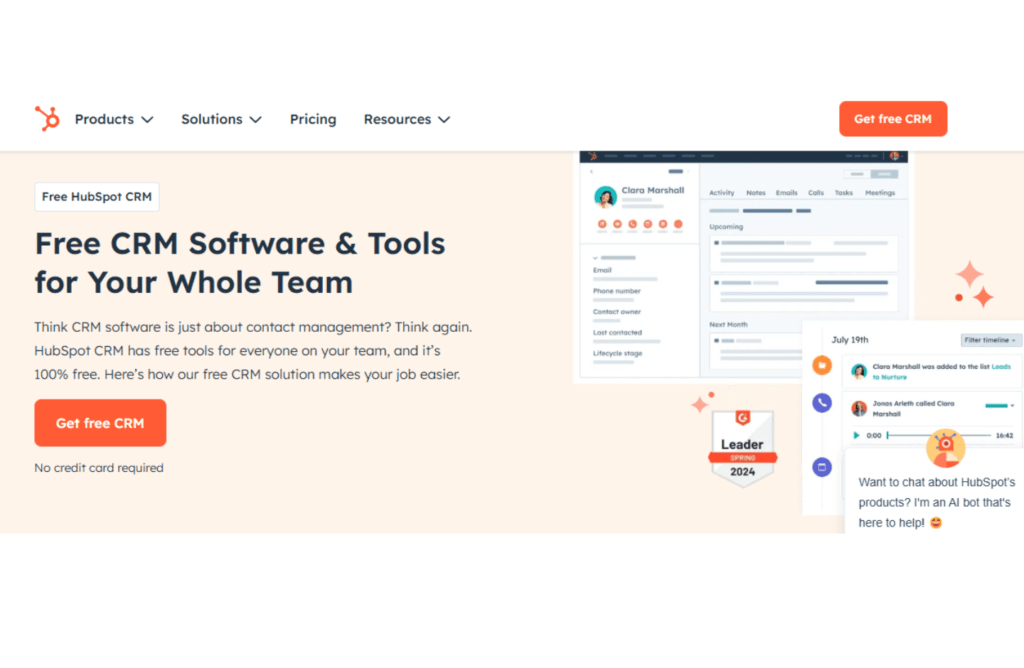
HubSpot is a powerful CRM and marketing automation platform built for businesses looking to scale their sales, marketing, and customer service efforts.
Launched in 2006, it has become one of the most trusted platforms for inbound marketing, offering lead management, email automation, SEO tools, social media marketing, and sales tracking.
✅ Who Is HubSpot For?
- Businesses needing advanced CRM & sales automation
- Companies focused on inbound marketing (SEO, blogging, email marketing)
- B2B businesses that rely on relationship-based sales
- Medium to large businesses managing multiple teams
❌ Who Shouldn’t Use HubSpot?
Businesses that don’t rely heavily on CRM and sales pipelines
Solopreneurs and small business owners on a budget
Users who need an all-in-one funnel-building platform
What is Kartra?
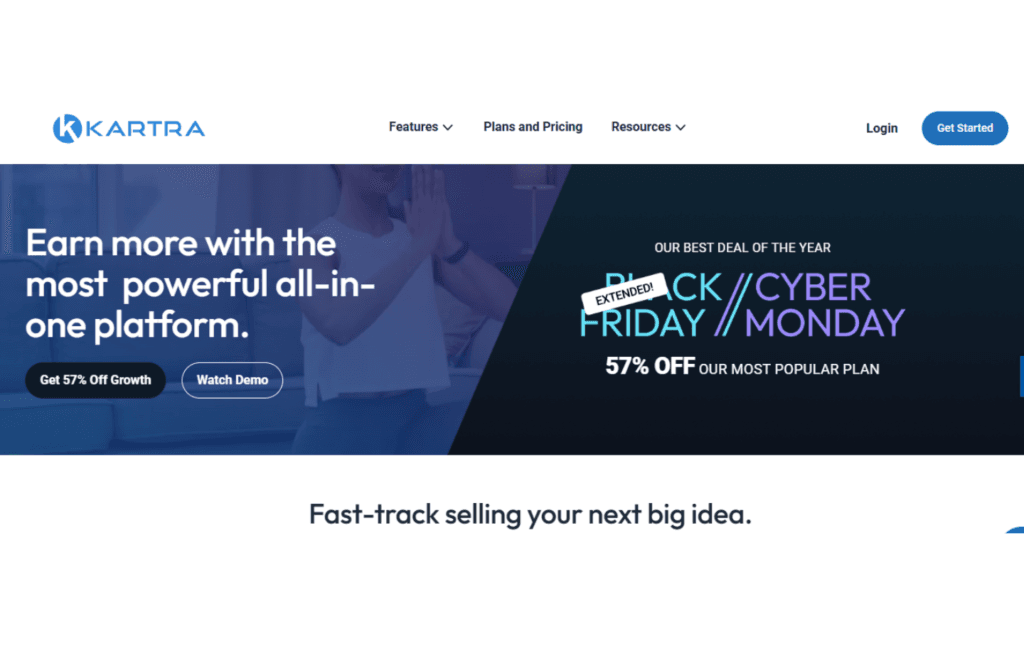
Kartra is an all-in-one marketing platform designed for digital entrepreneurs, course creators, and businesses looking to sell products and services online.
Launched in 2018, Kartra focuses on sales funnels, membership sites, automation, and email marketing—making it an ideal tool for selling online courses, memberships, and digital products.
✅ Who Is Kartra For?
- Entrepreneurs, coaches, and consultants
- Businesses selling online courses, memberships, or digital products
- Marketers who need an all-in-one funnel and automation solution
- Agencies managing multiple marketing assets
❌ Who Shouldn’t Use Kartra?
Sales teams that need pipeline management and lead tracking
Companies that require a robust CRM system like HubSpot
Businesses focused on inbound marketing (SEO, blogging, content marketing)
Kartra vs. HubSpot – Key Similarities and Differences
After working with both Kartra and HubSpot, I’ve noticed some key areas where they overlap and where they take different paths. Let’s break it down!
Similarities
Both Kartra and HubSpot are all-in-one marketing platforms, meaning they replace multiple tools and help businesses streamline their marketing and sales processes.
They’re built to be end-to-end business solutions, offering:
✅ Email marketing and automation for lead nurturing and customer engagement
✅ Landing page and funnel builders to drive conversions
✅ CRM (Customer Relationship Management) tools for lead tracking and sales
✅ Membership & course hosting for businesses selling digital products
✅ Marketing analytics & reporting to measure campaign performance
If you’re a business looking to centralize your marketing, sales, and automation, both platforms provide high-tier plans that allow for scalability and growth.
And if you want to test-drive the software before committing, both offer free trials:
- Kartra: 30-day trial
- HubSpot: Free CRM + 14-day trial for premium features
Differences
Despite their similarities, these platforms have distinct strengths that cater to different types of businesses.
| Feature | Kartra | HubSpot |
| Ideal For | Course creators, online businesses, and solopreneurs ✅ | Medium-to-large businesses needing advanced CRM & automation ✅ |
| CRM & Lead Management | Basic tagging and segmentation ❌ | AI-powered CRM with pipeline automation ✅ |
| Sales Funnels | Built-in funnel builder ✅ | Requires third-party integrations ❌ |
| Marketing Automation | Email-based automation ✅ | Multi-channel automation (Email, SMS, social, chatbots) ✅ |
| SEO & Blogging | No built-in blogging or SEO tools ❌ | Advanced SEO and blogging tools for inbound marketing ✅ |
| Landing Pages | Drag-and-drop builder with pre-built templates ✅ | Custom landing pages with advanced analytics ✅ |
| Course & Memberships | Built-in course and membership hosting ✅ | Requires integrations with third-party LMS ❌ |
| Multi-Channel Outreach | Email-focused ❌ | Email, SMS, live chat, chatbot, and social media automation ✅ |
| Customer Support | Live chat (higher plans), email support ✅ | 24/7 chat, phone, and email support ✅ |
| Pricing | Starts at $119/month | Starts at $15/month (CRM only), $890+ for advanced marketing |
User Experience and Interface
The ease of navigating a platform plays a big role in how quickly you can set up and run your marketing campaigns.
Kartra
Kartra offers a visually appealing and intuitive interface. Designed with marketers and solopreneurs in mind, it provides an easy-to-use drag-and-drop builder for pages, emails, and sales funnels.
It also includes step-by-step tutorials and an interactive onboarding guide, making it simple for beginners to set up campaigns without technical expertise.
HubSpot
HubSpot’s interface is modern, clean, and highly customizable, but it comes with a steeper learning curve. Unlike Kartra, HubSpot caters more to sales and customer relationship management, meaning its dashboard is packed with data, analytics, and CRM tools.
While it provides HubSpot Academy and a massive knowledge base, it may take some time to get familiar with all its features.
Comparison Table: User Experience and Interface
| Feature | Kartra | HubSpot |
| Ease of Use | Beginner-friendly, intuitive interface ✅ | More advanced, requires setup ❌ |
| Dashboard Design | Sleek, modern, and visually appealing ✅ | Data-heavy and CRM-focused ❌ |
| Onboarding & Tutorials | Step-by-step guides, video tutorials ✅ | Extensive training resources ✅ |
🏆 Winner: Kartra
Kartra’s user-friendly interface and guided onboarding make it a better choice for those new to marketing platforms.
Pricing Comparison
Both platforms have tiered pricing plans, but their structures cater to different types of businesses.
Kartra
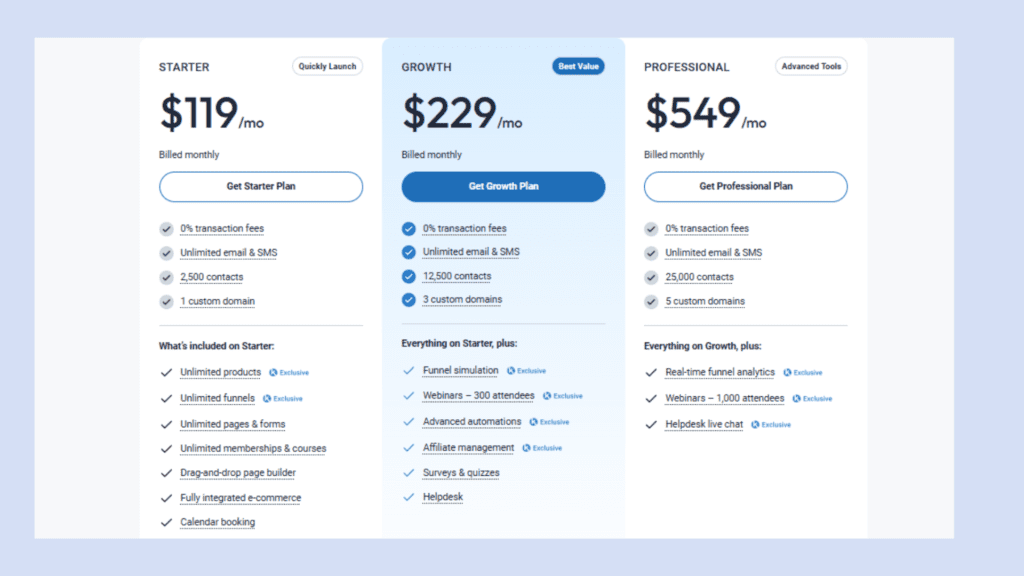
Kartra’s pricing is straightforward and all-inclusive, with no need for extra integrations or add-ons.
- Starter – $119/month: Ideal for solopreneurs and small businesses.
- Growth – $229/month: Adds advanced automation, affiliate marketing, and higher usage limits.
- Professional – $549/month: Designed for agencies and large businesses needing more powerful tools.
- Annual Discount: Up to 22% off with annual billing.
HubSpot
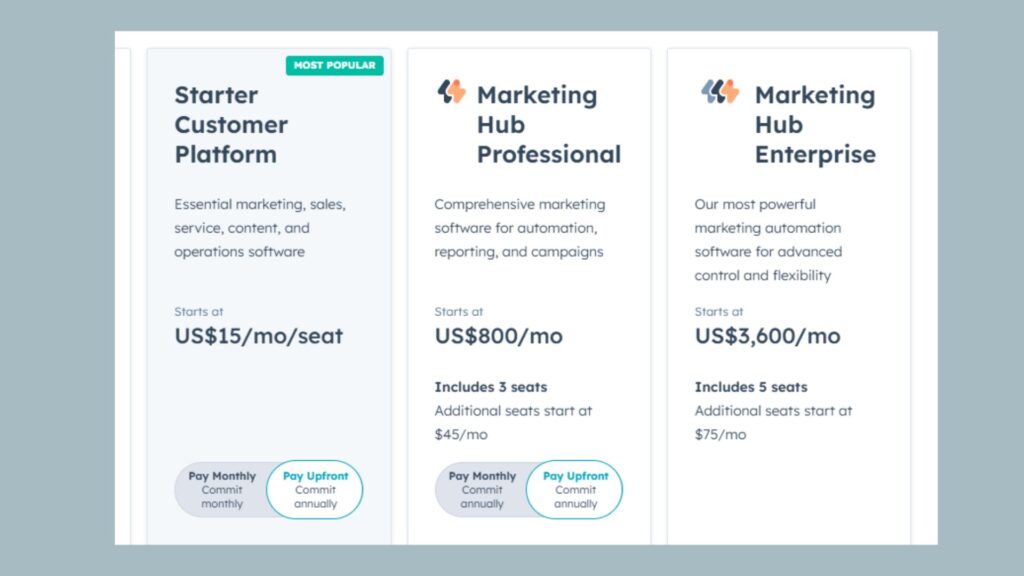
HubSpot offers a free CRM, but its paid plans can be expensive as you scale.
- Starter – $15/month: Basic email marketing, automation, and CRM.
- Professional – $800/month: Advanced automation, custom reporting, and AI-powered tools.
- Enterprise – $3,600/month: Full CRM suite with predictive analytics, team management, and premium automation.
- Annual Discount: Up to 16% off with yearly plans.
Comparison Table: Pricing
| Plan | Kartra Pricing | HubSpot Pricing |
| Starter Plan | $119/month | $15/month (Basic CRM) |
| Mid-Tier Plan | $229/month | $800/month |
| Top-Tier Plan | $549/month | $3,600/month |
| Annual Discount | Up to 22% off ✅ | Up to 16% off ✅ |
🏆 Winner: Kartra for Small Businesses, HubSpot for Enterprises
Kartra is better for small businesses with straightforward pricing, while HubSpot is costly but powerful for larger enterprises.
CRM and Lead Management
A Customer Relationship Management (CRM) system is essential for businesses that rely on lead tracking, sales pipelines, and automation.
Kartra
Kartra offers basic CRM tools, such as:
✅ Contact tagging and segmentation
✅ Automated email follow-ups
✅ Basic lead tracking and scoring
While these are useful for small businesses and solopreneurs, Kartra’s CRM is not as advanced as HubSpot’s pipeline management.
HubSpot
HubSpot provides one of the best CRMs in the industry, featuring:
✅ Advanced lead tracking and pipeline management
✅ AI-driven sales forecasting and deal automation
✅ Multi-channel outreach (email, SMS, social, and phone calls)
Comparison Table: CRM & Lead Management
| Feature | Kartra | HubSpot |
| Lead Tracking | Basic CRM tools ❌ | Advanced CRM with automation ✅ |
| Sales Pipeline Management | Simple tagging system ❌ | AI-powered deal tracking ✅ |
| Multi-Channel Communication | Email-based only ❌ | Email, SMS, WhatsApp, Messenger ✅ |
🏆 Winner: HubSpot
If you need a strong CRM and sales automation, HubSpot is the clear winner.
Landing Pages & Sales Funnels
Both platforms allow users to build landing pages and sales funnels, but they take different approaches.
Kartra
Kartra offers built-in funnel-building tools, allowing users to map out and automate sales processes.
✅ Drag-and-drop page builder
✅ Pre-designed funnel templates
✅ A/B split testing for landing pages
HubSpot
HubSpot offers landing page tools, but they require add-ons or third-party integrations for full funnel-building functionality.
✅ Customizable landing pages
❌ No built-in funnel builder (requires integrations)
✅ Advanced tracking and reporting
Comparison Table: Landing Pages & Funnels
| Feature | Kartra | HubSpot |
| Sales Funnel Setup | Built-in funnel builder ✅ | Requires integrations ❌ |
| Landing Page Customization | Drag-and-drop editor ✅ | Custom HTML/CSS editing ✅ |
| A/B Testing | Available ✅ | Available ✅ |
🏆 Winner: Kartra
Kartra’s built-in sales funnel builder makes it the better option for marketers and online business owners.
Email Marketing & Automation
Email automation is crucial for lead nurturing and sales conversions.
Kartra
Kartra includes email marketing tools with:
✅ Pre-designed email templates
✅ Automated email sequences
✅ Tag-based segmentation
HubSpot
HubSpot goes beyond email by offering:
✅ AI-driven email personalization
✅ Multi-channel automation (email, SMS, social media, and chatbots)
✅ Dynamic content for tailored campaigns
Comparison Table: Email Marketing & Automation
| Feature | Kartra | HubSpot |
| Email Sequences | Automated follow-ups ✅ | AI-driven personalization ✅ |
| Multi-Channel Automation | Email only ❌ | Email, SMS, social, chatbots ✅ |
| A/B Testing | Available ✅ | Available ✅ |
🏆 Winner: HubSpot
HubSpot’s AI-powered email personalization and multi-channel automation make it a better choice for scaling businesses.
Pros and Cons of HubSpot
Pros
✅ Free CRM with Powerful Features
HubSpot offers a completely free CRM that includes contact management, deal tracking, and email automation—making it a great starting point for businesses of all sizes.
✅ Advanced Marketing & Sales Automation
From email workflows to AI-driven personalization, HubSpot provides top-tier automation tools that help businesses nurture leads, close deals, and scale their marketing efforts.
✅ Multi-Channel Marketing Capabilities
Unlike Kartra, HubSpot supports email marketing, SMS automation, social media scheduling, and live chat, allowing you to reach leads across multiple platforms.
✅ Seamless Integrations & API Access
With 1,000+ integrations, HubSpot connects effortlessly with popular tools like Salesforce, Zapier, WordPress, Stripe, and Shopify, making it an ideal choice for businesses using multiple platforms.
✅ Industry-Leading Analytics & Reporting
HubSpot provides detailed dashboards, marketing attribution reports, and AI-powered insights, allowing businesses to track and optimize their marketing performance in real-time.
✅ Extensive Training & Customer Support
With HubSpot Academy, 24/7 support, live chat, and phone support, users get tons of resources and real-time assistance to ensure they maximize their investment.
✅ Scalable for Growing Businesses
Whether you’re a startup or a large enterprise, HubSpot offers customizable solutions that scale as your business grows, making it one of the most flexible platforms on the market.
Cons
❌ Can Get Expensive as You Scale
While HubSpot’s CRM is free, its marketing, sales, and automation tools can get very costly—especially for businesses needing enterprise-level features.
❌ Steep Learning Curve for Beginners
With its advanced automation, reporting, and customization options, new users might feel overwhelmed navigating the platform, requiring training and onboarding time.
❌ Limited Customization in Some Areas
While HubSpot excels in automation and analytics, some features (like landing page and funnel builders) aren’t as flexible as dedicated sales funnel tools like Kartra or ClickFunnels.
❌ Heavy Reliance on Add-Ons & Integrations
To unlock its full potential, HubSpot often requires third-party integrations or premium add-ons, which can drive up costs and add complexity to your workflow.
❌ Email & Landing Page Features Could Be More Robust
Compared to Kartra, HubSpot’s email builder and landing page editor are less intuitive and may require custom coding for advanced designs.
Pros and Cons of Kartra
Pros
✅ Easy Onboarding with a Welcome Video & Interactive Guide
Kartra makes it simple for new users to get started with a step-by-step guide and an interactive walkthrough right from the start.
✅ Strong Community & Reliable Support
With an active Facebook group, helpful tutorials, and Kartra Academy, you’ll never feel lost when using the platform.
✅ 30-Day Free Trial
Kartra gives you a full month to test out its features before committing, which is great if you want to explore the platform risk-free.
✅ Built-In Webinar Functionality
Unlike many other platforms, Kartra lets you host webinars without needing third-party software, making it a great choice for coaches and course creators.
✅ Powerful Sales Funnel Features
Kartra’s advanced funnel-building tools allow you to create highly optimized sales sequences, helping you convert leads into customers with ease.
Cons
❌ Not the Cheapest Option
Even Kartra’s basic plan is priced on the higher side, making it less ideal for beginners on a tight budget.
❌ Limited Third-Party Integrations
Unlike some competitors, Kartra doesn’t integrate with as many external tools, which can be a drawback if you rely on other software.
❌ Usage Caps on Certain Features
Some of Kartra’s plans limit the number of contacts, team members, and emails you can have, which might be restrictive as your business grows.
Which One Should You Choose?
💡 Choose HubSpot if:
- You need an advanced CRM and sales tracking.
- You want multi-channel marketing automation.
- You focus on inbound marketing (SEO, blogging, content marketing).
- You’re a mid-to-large-sized business looking for enterprise-level automation.
💡 Choose Kartra if:
- You’re a solopreneur, coach, or online business owner.
- You need an all-in-one funnel-building platform.
- You want a simpler, cost-effective marketing solution.
- You’re looking for built-in course & membership site features.
Final Thoughts
Both HubSpot and Kartra are powerful marketing tools, but they serve different needs.
🔹 HubSpot is perfect for businesses needing a high-level CRM, advanced automation, and a focus on inbound marketing.
🔹 Kartra is ideal for solopreneurs and small businesses that need a user-friendly funnel builder, membership sites, and digital product sales.
If you’re still unsure, both offer free trials—so test them out and see which one fits your business best! 🚀
Also Read: https://appsaware.com/kartra-templates/
FAQs
1. Can I switch between HubSpot and Kartra?
Yes, both platforms allow data export and import, but adjustments may be needed.
2. Which platform is better for CRM?
HubSpot offers a more comprehensive and scalable CRM compared to Kartra.
3. Does Kartra have a free plan?
No, Kartra offers only paid plans, starting at $99/month.
4. Which platform is better for sales funnels?
Kartra is better for sales funnels, with built-in tools for creation and management.
5. Does HubSpot support membership hosting?
No, HubSpot does not offer membership hosting tools.
Maximize Your Business Potential With Kartra
Effortlessly manage and grow your online courses, coaching programs, and memberships in one platform to save time and boost productivity

Srishti Gaur is an accomplished SEO Associate with a strong background in content creation and software technology. With a knack for crafting strategies that drive traffic and improve search rankings, she combines her expertise in SEO with a deep understanding of tech tools and platforms. Passionate about bridging the gap between technology and impactful content, Srishti helps businesses grow their online presence and achieve measurable results.