
Ever feel torn between Kajabi and ConvertKit?
Both platforms are designed to help creators, entrepreneurs, and online businesses grow, but they serve different purposes. Having worked with both extensively, I’ve seen firsthand how they’ve evolved—especially in email marketing, course creation, and automation.
Let’s dive into this Kajabi vs ConvertKit comparison to help you decide which one aligns best with your business needs.
| Disclaimer: This article is for informational purposes only. Verify features and pricing on the official Kajabi and ConvertKit websites as they may change over time. |
Table of Contents
Kajabi vs ConvertKit: Quick Comparison
| Feature | Kajabi ✅ | ConvertKit ✅ |
| Ease of Use | Beginner-friendly ✅ | Slight learning curve ❌ |
| Onboarding | Video guides + Kajabi University ✅ | Tutorials + Knowledge Base ✅ |
| Email Marketing | Built-in email automation ✅ | Strong email automation ✅ |
| Sales Funnels | Advanced tools for pros ✅ | Landing pages, but no full funnels ❌ |
| CRM & Lead Management | Basic tagging system ✅ | Strong tagging & segmentation ✅ |
| Courses & Memberships | Great for hosting & selling courses ✅ | No native course platform ❌ |
| Landing Pages | Customizable, sales-focused ✅ | Basic landing page builder ✅ |
| Integrations | Supports major tools ✅ | Wide integration options ✅ |
| Customer Support | 24/7 chat & email support ✅ | Email support, no live chat ❌ |
| Pricing | Starts at $119/month ❌ | Starts at $0/month ✅ (Limited features) |
| Free Trial | 14 days ✅ | Free plan available ✅ |
What is Kajabi?
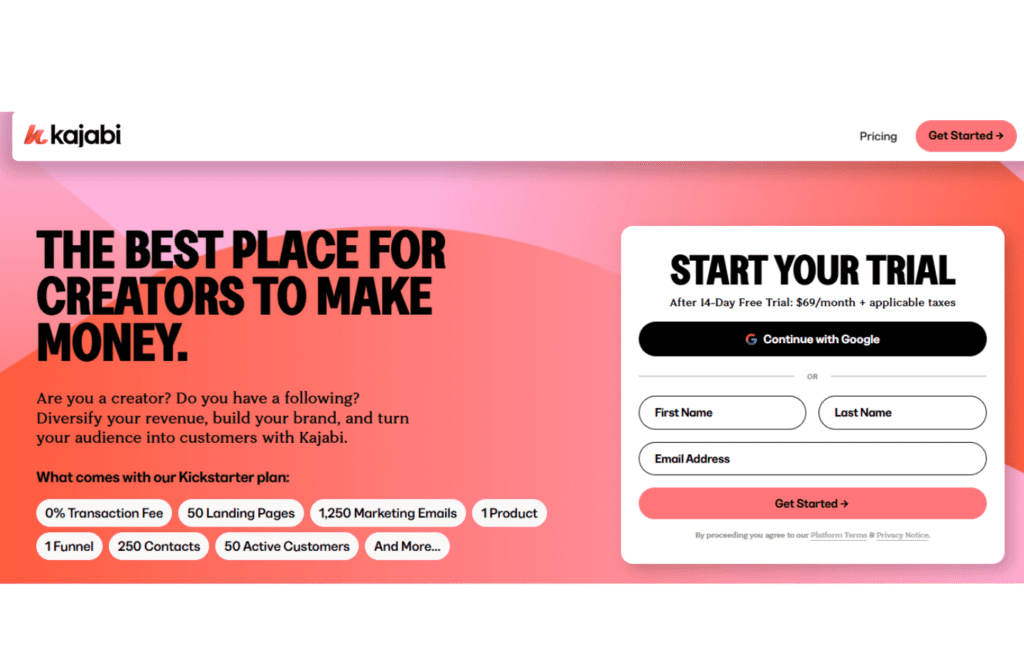
Kajabi is a premium all-in-one platform designed to help coaches, course creators, and entrepreneurs build, market, and sell their online programs.
It eliminates the need for multiple tools by combining course hosting, email marketing, sales funnels, and CRM into one seamless system.
✅ If you want to sell online courses, run memberships, and have all your tools under one roof, Kajabi is a top-tier option.
Who Is Kajabi For?
✔ Coaches & Course Creators who need an all-in-one platform
✔ Entrepreneurs looking to streamline their digital business
✔ Small Business Owners who want to avoid integrating multiple software tools
✔ High-Ticket Sellers who need a premium, conversion-focused solution
Best For: Selling courses, memberships, and digital products with an advanced marketing ecosystem.
What is ConvertKit?
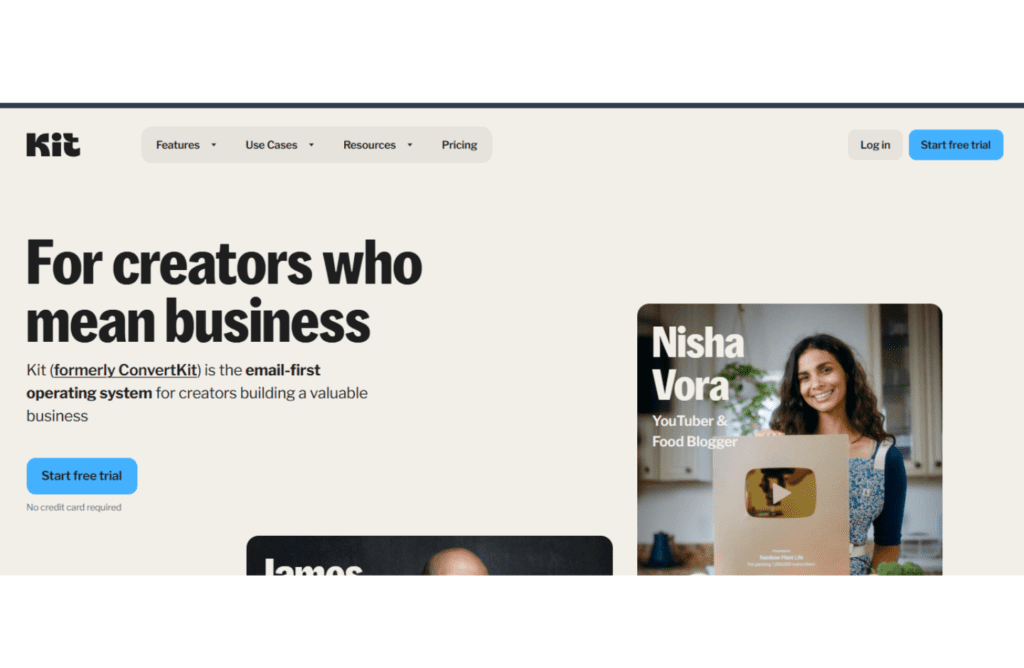
ConvertKit is a powerful email marketing platform built specifically for creators, bloggers, and online businesses who want to grow and monetize their audience.
Unlike Kajabi, ConvertKit does not offer course hosting but instead focuses on email automation, lead generation, and audience segmentation.
✅ If email marketing is your priority, ConvertKit is an excellent choice.
Who Is ConvertKit For?
✔ Bloggers & Content Creators who need strong email marketing automation
✔ Small Business Owners looking for affordable and scalable email solutions
✔ E-commerce Brands who want powerful audience segmentation
✔ Podcasters & YouTubers growing their audience through email
Best For: Email automation, lead nurturing, and audience segmentation.
Kajabi vs ConvertKit – Key Similarities and Differences
Similarities
Both Kajabi and ConvertKit offer:
✔ Email marketing tools for engaging with your audience
✔ Landing page builders for lead generation
✔ Automation workflows to streamline audience engagement
✔ Lead capture & segmentation features for targeted communication
✔ Integration with third-party tools
Both platforms are designed for online creators, but their core functionalities differ significantly.
Differences
| Feature | Kajabi ✅ | ConvertKit ✅ |
| Primary Focus | Course hosting & digital sales | Email marketing & audience growth |
| Sales Funnels | Yes, built-in funnels ✅ | No, only landing pages ❌ |
| Membership Sites | Yes ✅ | No ❌ |
| Course Hosting | Yes, built-in ✅ | No ❌ |
| Email Automation | Yes ✅ | Yes, more advanced ✅ |
| CRM & Lead Nurturing | Basic tagging system | Advanced segmentation ✅ |
| Pricing | Starts at $119/month | Free plan available ✅ |
User Experience & Interface
Kajabi
Kajabi offers a visually polished interface designed to be beginner-friendly. Its dashboard is intuitive, and users can access step-by-step tutorials, making the platform easy to navigate. The drag-and-drop editor allows creators to build pages, sales funnels, and courses without coding knowledge — whether you’re launching a coaching program or offering academic services like ghostwriter hausarbeit (German for “ghostwriter for academic papers”).
ConvertKit
ConvertKit follows a minimalist approach with a focus on simplicity. The dashboard is clean and uncluttered, but it lacks the graphical richness of Kajabi. While it is easy to set up email sequences and automation rules, users may require some learning curve when managing segmentation and tagging.
| Feature | Kajabi ✅ | ConvertKit ✅ |
| Ease of Use | Beginner-friendly | Some learning curve |
| Dashboard | Modern & intuitive | Clean & minimalist |
| Onboarding | Kajabi University + Video Guides | Basic tutorials |
🏆 Winner: Kajabi – More beginner-friendly with structured onboarding.
Pricing Comparison
Both platforms offer tiered pricing, but their structures reflect their different use cases.
Kajabi
Kajabi’s pricing is higher because it includes website hosting, course creation, email marketing, and automation.
- Basic – $119/month: Includes website, courses, email marketing, and automation for small businesses.
- Growth – $159/month: Adds advanced automation, affiliate marketing, and removes Kajabi branding.
- Pro – $319/month: Designed for scaling businesses with high-traffic needs.
Kajabi also offers discounts for annual billing, saving up to 20%.
ConvertKit
ConvertKit’s pricing is primarily based on the number of subscribers.
- Free Plan – $0/month: Limited to 1,000 subscribers with basic landing pages and email features.
- Creator – Starts at $9/month: Includes automation and audience segmentation.
- Creator Pro – Starts at $25/month: Adds advanced analytics, priority support, and newsletter monetization.
Pricing scales with subscriber count, so costs increase as your audience grows.
Comparison Table: Pricing
| Plan | Kajabi Pricing | ConvertKit Pricing (Starting At) |
| Entry-Level | $119/month | Free (up to 1,000 subscribers) |
| Mid-Tier | $159/month | $9/month |
| High-Tier | $319/month | $25/month |
| Annual Discount | Up to 20% off | No major discount on all plans |
🏆 Winner: ConvertKit
ConvertKit offers a more affordable entry point, especially for creators focused on email marketing.
Course Creation and Membership Sites
If you plan to sell online courses or memberships, Kajabi and ConvertKit offer different approaches.
Kajabi
Kajabi is built for online courses, with a structured course builder that allows you to:
✅ Organize lessons into modules
✅ Add quizzes, assessments, and progress tracking
✅ Offer memberships with different access levels
✅ Drip content and schedule releases
It also includes built-in community features, so you can create an interactive learning experience without needing third-party tools.
ConvertKit
ConvertKit is not designed for course creation but allows you to:
✅ Sell digital downloads like PDFs and templates
✅ Automate email sequences for educational content
✅ Integrate with third-party course platforms (Teachable, Thinkific, etc.)
However, ConvertKit does not provide a built-in course builder or membership site features.
Comparison Table: Course Creation & Membership Sites
| Feature | Kajabi | ConvertKit |
| Course Builder | Yes, structured for lessons | No, requires third-party tools |
| Membership Sites | Yes, built-in | No, not supported |
| Digital Products | Yes, including coaching | Yes, for downloads |
🏆 Winner: Kajabi
Kajabi is the clear choice for course creators and membership-based businesses.
Email Marketing & Automation
Both platforms offer email marketing, but ConvertKit is more specialized in this area.
Kajabi
Kajabi includes email automation as part of its all-in-one package.
✅ Visual automation builder for drip campaigns
✅ Custom email templates
✅ A/B testing for optimization
✅ Basic audience segmentation
While powerful, Kajabi’s email system is secondary to its course and website tools.
ConvertKit
ConvertKit is built around email marketing and excels in:
✅ Advanced automation workflows
✅ Tag-based segmentation for highly targeted campaigns
✅ A/B testing for subject lines
✅ Deliverability-focused design
For creators who rely heavily on email marketing, ConvertKit offers deeper functionality.
Comparison Table: Email Marketing & Automation
| Feature | Kajabi | ConvertKit |
| Email Automation | Yes, basic workflows | Yes, advanced workflows |
| Segmentation | Limited tagging | Advanced tagging & filtering |
| A/B Testing | Available | More refined testing options |
🏆 Winner: ConvertKit
ConvertKit provides more advanced email marketing features, making it the better choice for audience building.
Landing Pages and Funnels
Kajabi and ConvertKit both offer landing pages, but they serve different purposes.
Kajabi
Kajabi includes a funnel-building system called Pipelines:
✅ Pre-built funnel templates for sales, lead generation, and webinars
✅ Customizable landing pages with a drag-and-drop editor
✅ Full website builder included
ConvertKit
ConvertKit offers simple landing pages:
✅ Easy-to-use templates for lead magnets
✅ Built-in forms for collecting emails
✅ No full website builder, just standalone pages
Comparison Table: Landing Pages & Funnels
| Feature | Kajabi | ConvertKit |
| Funnel Builder | Yes, Pipelines | No, standalone pages only |
| Customization | High, drag-and-drop editor | Limited template options |
| Website Builder | Yes, full website creation | No, only landing pages |
🏆 Winner: Kajabi
Kajabi provides a more robust system for landing pages, sales funnels, and full websites.
Pros and Cons of Kajabi
Pros
✅ All-in-One Platform for Course Creators
Kajabi offers everything you need to create, market, and sell online courses, memberships, and digital products without needing third-party tools.
✅ Built-In Website & Landing Page Builder
With customizable templates and a drag-and-drop editor, Kajabi makes it easy to create professional-looking websites and landing pages without coding.
✅ Robust Community & Customer Support
Kajabi provides 24/7 live chat support (for higher plans), a knowledge base, and an active Facebook community to help users navigate the platform.
✅ Advanced Membership & Course Features
Includes drip content, quizzes, assessments, and built-in community features, making it ideal for course creators and membership site owners.
✅ Integrated Email Marketing & Automation
Kajabi has a powerful email marketing system with automation, segmentation, and pipeline features to nurture leads and increase conversions.
Cons
❌ Expensive Compared to Alternatives
Kajabi’s pricing starts higher than many competitors, which may not be ideal for beginners or small businesses on a budget.
❌ Limited Customization for Advanced Users
While Kajabi offers beautiful templates, customization options are somewhat restricted compared to more flexible platforms like WordPress.
❌ No Built-In Sales Funnel Mapping
Unlike platforms like Kartra, Kajabi doesn’t provide a visual funnel builder, meaning you have to structure your marketing flows manually.
Pros and Cons of ConvertKit
Pros
✅ Simple & User-Friendly for Email Marketing
ConvertKit has an intuitive interface, making it easy for beginners to set up email campaigns, automate sequences, and manage subscribers.
✅ Great for Bloggers & Content Creators
Built specifically for content creators, ConvertKit makes it easy to grow an audience with features like forms, landing pages, and lead magnets.
✅ Tag-Based Subscriber Management
Instead of lists, ConvertKit uses tags, allowing for better segmentation and automation based on user behavior.
✅ Built-In Automation & Sequences
ConvertKit provides a visual automation builder, making it easy to create email funnels, segment subscribers, and automate follow-ups.
✅ Free Plan Available
Unlike Kajabi, ConvertKit offers a free plan for up to 1,000 subscribers, making it a budget-friendly option for beginners.
Cons
❌ Limited Features Beyond Email Marketing
ConvertKit focuses mainly on email marketing, so if you need course hosting, sales funnels, or memberships, you’ll need additional tools.
❌ Basic Landing Page Builder
While ConvertKit includes landing page templates, the customization options are limited compared to Kajabi or dedicated website builders.
❌ No Native CRM or Sales Pipelines
Unlike Kajabi, ConvertKit doesn’t offer advanced CRM or sales funnel features, which may be a drawback for businesses needing an all-in-one platform.
Final Verdict
If you’re looking for an all-in-one solution for online courses, memberships, and sales funnels, Kajabi is the better choice. If your focus is primarily on email marketing and audience engagement, ConvertKit is the more cost-effective and specialized option.
| Feature | Best Choice |
| Course Creation | Kajabi |
| Membership Sites | Kajabi |
| Email Marketing | ConvertKit |
| Landing Pages | Kajabi |
| Pricing | ConvertKit |
🏆 Overall Winner: It Depends
- Choose Kajabi if you want an all-in-one platform for courses, memberships, and marketing.
- Choose ConvertKit if you need a powerful and affordable email marketing tool for audience building.
FAQs
1. Which platform is better for email marketing?
ConvertKit is specifically built for email marketing and offers advanced segmentation.
2. Does Kajabi include email marketing?
Yes, Kajabi has built-in email marketing, but ConvertKit offers more advanced features.
3. Which platform is more affordable?
ConvertKit is much more affordable, with a free plan for small creators.
4. Does ConvertKit handle course hosting?
No, ConvertKit does not have course hosting or membership tools like Kajabi.
5. Who should choose Kajabi over ConvertKit?
Businesses that focus on online courses, memberships, and community building should choose Kajabi.

Srishti Gaur is an accomplished SEO Associate with a strong background in content creation and software technology. With a knack for crafting strategies that drive traffic and improve search rankings, she combines her expertise in SEO with a deep understanding of tech tools and platforms. Passionate about bridging the gap between technology and impactful content, Srishti helps businesses grow their online presence and achieve measurable results.





















You should take part in a contest for one of the best blogs on the web. I will recommend this site!